
The building materials sector in 2026 operates under a new set of rules. Regulatory mandates for carbon transparency have moved from voluntary to compulsory, and the “green premium” for sustainable products is disappearing as efficient production scales up. For manufacturers and suppliers, the middle ground is vanishing: companies either lead with data-backed performance and circularity, or they lose market share to those who do.
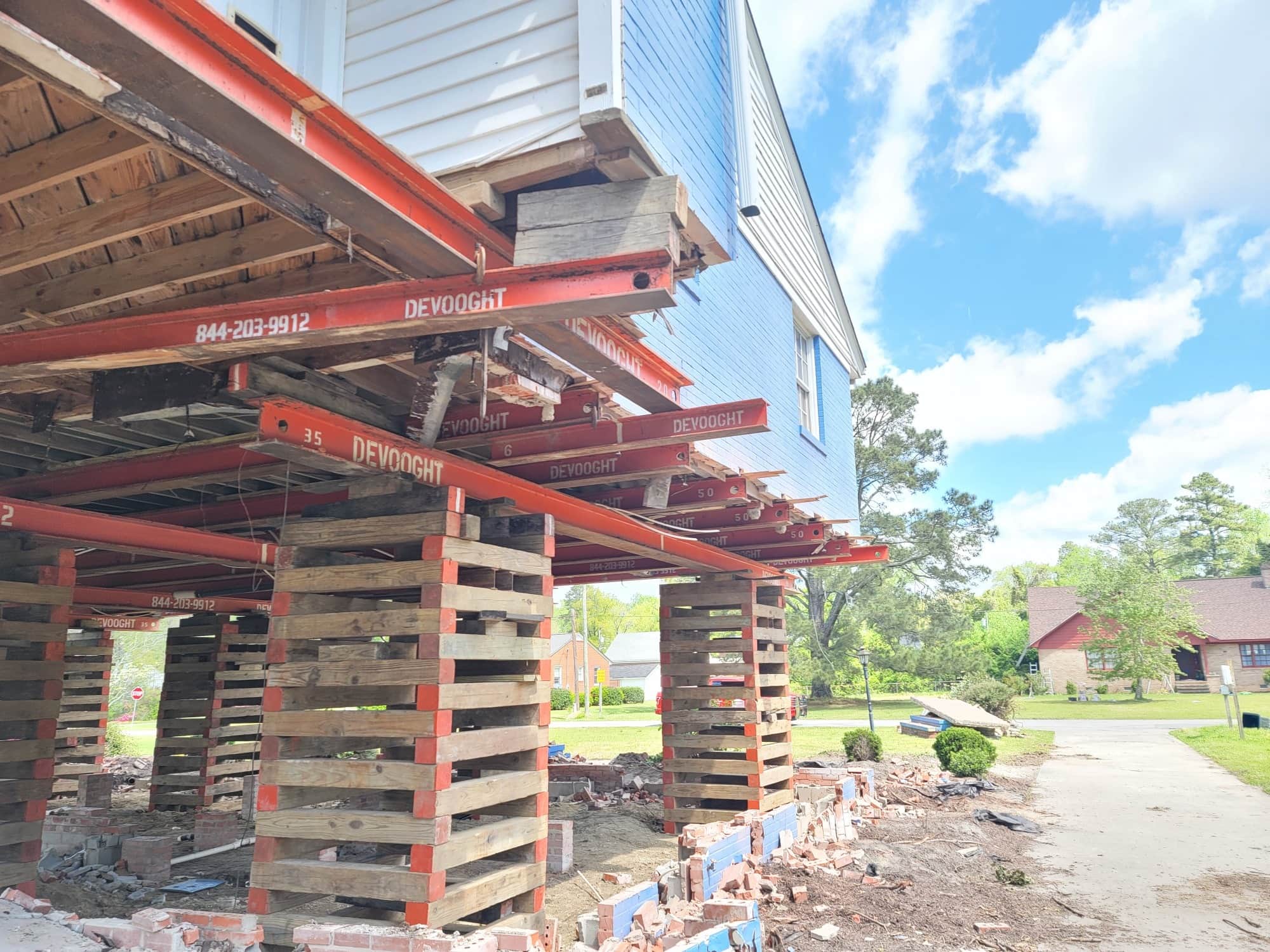
At DeVooght House Lifters, we see how these material shifts play out on the job site. The beams, piles, and engineered systems we install today must meet standards that barely existed five years ago. We know that in 2026, a material is only as good as the data that comes with it.
1. Regulatory Pressure Drives Data Transparency
The era of vague “eco-friendly” marketing has ended. In 2026, federal and state contracts require Environmental Product Declarations (EPDs) for core materials like concrete, steel, glass, and asphalt. These documents function like nutrition labels for carbon, forcing manufacturers to quantify the lifecycle impact of every cubic yard and ton they sell.
This shift creates a clear divide. Suppliers who invested early in tracking their supply chains now win bids because they can provide the necessary documentation instantly. Those scrambling to calculate their footprint face delays that disqualify them from major infrastructure and government-funded projects. The “buy clean” mandates that started in a few states have now become the baseline for public work across the country.
DeVooght House Lifters encounters this reality when sourcing steel for elevation projects. “Inspectors and engineers ask for material certs that show more than just yield strength now,” a project manager notes. “They want to know where it came from and what the embodied carbon looks like. The paperwork matters as much as the steel.”
Greenwashing carries higher risks than ever. With AI tools capable of auditing supply chain claims, companies that exaggerate their sustainability credentials face reputational damage and legal challenges. Trust has become a hard currency, and it is earned through verified third-party data.
2. Smart and Adaptive Materials Enter the Mainstream
Materials that do more than just sit there are transforming how we build. The market for smart and adaptive materials is growing at over 12 percent annually, driven by the need for structures that monitor their own health. Concrete with embedded sensors can now report real-time strength data during curing and alert maintenance teams to corrosion or stress fractures years later.
Dynamic glazing, which tints automatically to control heat gain, is becoming standard in commercial and high-end residential projects. This technology reduces cooling loads by 25 to 30 percent, allowing builders to downsize mechanical systems and lower long-term operating costs. The initial cost is offset by these systemic savings, changing the conversation from “price per square foot” to “cost per year of operation.”
Self-healing polymers and bio-based composites are moving from labs to pilot projects. These materials can repair minor cracks without human intervention, extending the service life of infrastructure and reducing the need for disruptive repairs. For a company like DeVooght, which deals with structures under significant stress, the promise of materials that can signal their status is a game-changer for safety and longevity.
3. The Circular Economy Reshapes Supply Chains
The “take-make-waste” model is being dismantled by economic necessity and policy. With the recycling market for building materials projected to reach $750 billion by 2033, the industry is mining the built environment for resources. Steel and aluminum, which account for half of the embodied carbon in construction materials, are prime targets for reclamation and reuse.
Design for disassembly is gaining traction. Manufacturers are creating products that can be easily taken apart and separated into pure material streams at the end of their life. This shift turns demolition sites into material banks, where value is harvested rather than buried. Supply chains are adapting to handle reverse logistics, moving used materials back to factories for reprocessing.
However, challenges remain. The lack of harmonized “end-of-waste” criteria in some regions complicates the cross-border movement of recycled materials. Regulatory frameworks need to catch up with the technology to allow these circular flows to scale efficiently. Until then, local and regional loops offer the most immediate opportunities.
DeVooght House Lifters sees this in the reuse of structural steel and cribbing. “We have always reused our heavy equipment and support steel,” says a team lead. “Now we see that mindset spreading to the permanent materials we install. Clients ask if the old brick can be saved or if the foundation concrete can be crushed for base. They want to waste less.”
4. Bio-Based and Low-Carbon Alternatives Scale Up
Nature is becoming the factory for the next generation of building products. The market for bio-based materials is forecast to exceed $112 billion by 2032, with insulation made from hemp, straw, and mycelium leading the charge. These materials offer excellent thermal performance and carbon sequestration, turning buildings into carbon sinks.
Low-carbon concrete is solving one of the industry’s biggest emissions problems. By using supplementary cementitious materials and carbon capture technologies, manufacturers are producing concrete that meets strength requirements with a fraction of the carbon footprint. This innovation is critical, given that cement production alone is responsible for roughly 8 percent of global CO2 emissions.
Mass timber and cross-laminated timber (CLT) continue to replace steel and concrete in mid-rise structures. These engineered wood products are lighter, sequester carbon, and allow for faster assembly. The challenge lies in scaling the supply chain to meet booming demand while ensuring sustainable forestry practices.
For homeowners, these materials offer tangible benefits. Bio-based insulation regulates humidity better than synthetic alternatives, creating healthier indoor environments. “We are seeing a shift where ‘healthy home’ means natural materials, not just air filters,” notes a DeVooght design consultant. “People want to live inside walls that breathe.”
5. AI and Digitalization Optimize Logistics and Production
Artificial intelligence is cleaning up the inefficiencies that have plagued construction supply chains for decades. AI-driven demand forecasting can predict material needs by region and weather pattern, reducing inventory waste by up to 30 percent. This precision allows suppliers to run leaner operations while ensuring that materials are available when and where they are needed.
Digital material passports are creating a golden thread of information. These digital records track a material’s composition, origin, and performance data from production through installation to end-of-life. This transparency simplifies maintenance, renovation, and eventual recycling, adding long-term value to the asset.
In manufacturing, AI and robotics are improving quality control and consistency. Automated systems can detect defects that human eyes miss, ensuring that every batch of material meets the strict performance standards required by modern building codes. This reduces waste in the factory and failure rates in the field.
Closing Perspective from the DeVooght Team
The building materials industry in 2026 is defined by accountability. The days of buying materials based solely on the lowest sticker price are fading. Builders, owners, and regulators now look at the total cost—environmental, operational, and social.
DeVooght House Lifters embraces this evolution. We know that a house lift is only as secure as the materials that support it. “We use the best materials not just because they last,” the team says, “but because they give our clients peace of mind. When you put a family’s home in the air, you do not cut corners on the steel or the concrete.”
The opportunities in this new landscape belong to those who can prove their value. Whether it is a smart sensor in a concrete pile or a fully traceable steel beam, the materials that win in 2026 are the ones that tell a story of quality, resilience, and responsibility.