Coastal homeowners face a growing list of challenges when it comes to protecting their property from flooding. Between rising insurance premiums, stricter FEMA regulations, and the reality that flood damage costs the United States between $180 billion and $496 billion each year according to the Congressional Joint Economic Committee, finding the right foundation solution matters more than ever. Helical pile foundation installation has become a go-to method for building and retrofitting homes in coastal flood zones because these steel-shaft systems reach stable soil layers that surface-level foundations simply cannot access. This guide breaks down what FEMA requires for foundations in flood-prone coastal areas, how helical piles meet (and often exceed) those requirements, and what the process looks like from start to finish.
What Are FEMA Flood Zone Designations and Why Do They Affect Your Foundation?
FEMA classifies flood risk using Flood Insurance Rate Maps (FIRMs), and the zone your property sits in directly controls what type of foundation you can build or retrofit. Two coastal zone types carry the most significant construction requirements for homeowners considering helical piles.
Zone VE (Coastal High Hazard Area) is the most restrictive. These areas face wave heights of three feet or more during a 100-year flood event. FEMA and the National Flood Insurance Program (NFIP) require all new construction and substantial improvements in VE zones to use open, deep foundations like piles or columns. The lowest horizontal structural member of the building must sit at or above the Design Flood Elevation (DFE). Closed foundations such as basements, crawl spaces, and slab-on-grade are not permitted.
Coastal A Zones sit between VE zones and standard inland A zones. These areas experience wave heights between 1.5 and 3 feet during the base flood. While FEMA’s minimum NFIP requirements allow closed foundations here, many communities and structural engineers strongly recommend using VE-zone construction standards (open pile foundations) in Coastal A Zones because the wave and debris forces are still significant enough to damage conventional foundations.
“We see too many coastal homeowners discover their foundation type only becomes an issue after a major storm. By then, the damage is done. Planning your foundation around FEMA requirements before construction or during a retrofit puts you ahead of the curve and protects your investment for decades.” – The Team at DeVooght
Key FEMA flood zone designations and their foundation requirements:
| Flood Zone | Wave Height During Base Flood | Foundation Requirement | Elevation Standard |
|---|---|---|---|
| Zone VE | 3+ feet | Open, deep foundation (piles/columns) required | Lowest horizontal structural member at or above DFE |
| Coastal A Zone | 1.5 to 3 feet | Closed foundation allowed but open foundation recommended | Top of lowest floor at or above BFE |
| Zone AE (non-coastal) | Below 1.5 feet | Multiple types permitted | Top of lowest floor at or above BFE |
| Zone X | Minimal | No FEMA-mandated foundation type | No elevation mandate |
The Base Flood Elevation represents the height floodwaters are projected to reach during a 1% annual chance flood (the 100-year flood). The Design Flood Elevation is typically the BFE plus any additional freeboard your local community has adopted. Freeboard is extra height, often one to three feet above BFE, that serves as a safety margin. Building higher than the minimum is something we always recommend because it reduces risk and can bring down your flood insurance premium substantially under FEMA’s current pricing model.
How Do Helical Piles Meet FEMA’s Coastal Foundation Requirements?
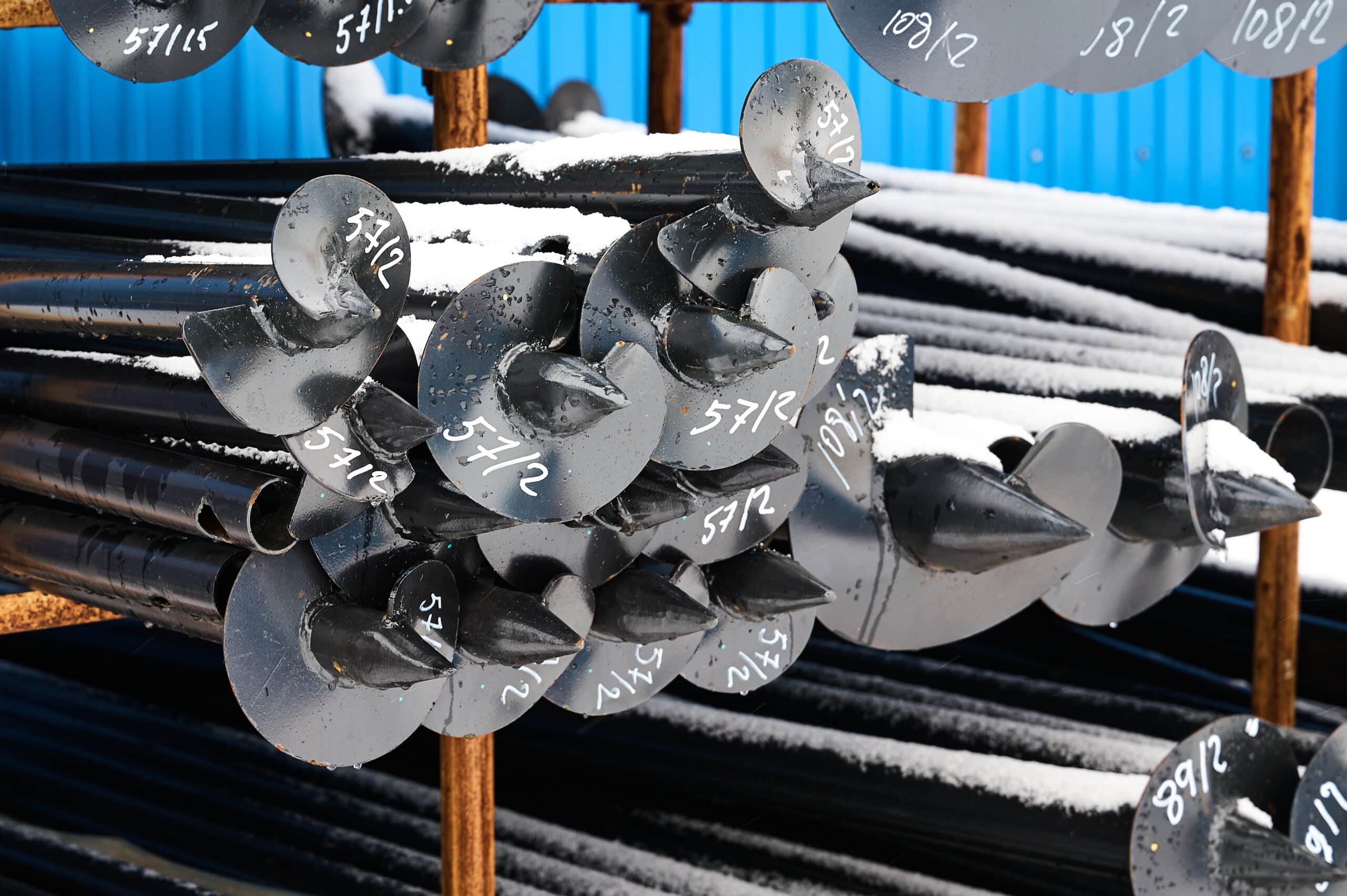
Helical piles are steel shafts fitted with one or more spiral-shaped plates (called helix plates or blades) that screw into the ground using hydraulic equipment. Each helix plate acts like a thread, pulling the pile deeper into the soil until it reaches a stable, load-bearing stratum below the weak surface layers common in coastal environments. This design makes them a strong match for FEMA’s open foundation mandate in VE zones and Coastal A Zones.
Reasons helical piles align well with FEMA’s coastal construction standards:
- Open foundation classification: Because the steel shafts present minimal surface area to floodwaters, helical piles qualify as an open foundation system. This is the only type FEMA allows in VE zones. The slim profile reduces the lateral flood load on the structure compared to solid wall foundations or even wide pier columns.
- Deep soil engagement: Coastal soils are often sandy, saturated, or prone to scour during storm surge events. Helical piles bypass these unstable upper layers and anchor into deeper, denser strata that remain unaffected by surface erosion or wave action. Typical residential installations reach 10 to 30 feet deep, with extensions available to 100 feet or more when soil conditions demand it.
- Scour and erosion resistance: FEMA guidelines stress that house lifting services for flood prevention and open pile foundations must resist erosion and scour during a design flood event. Because helical piles derive their load-bearing strength from the helix plates embedded in deep soil (not from friction along the shaft or from surface conditions), they maintain structural integrity even when several feet of surface soil washes away during a hurricane or nor’easter.
- Uplift resistance: In VE zones, structures face both lateral forces from waves and uplift forces from hydrostatic pressure and high winds. Helical piles resist tension (uplift) loads and compression loads, giving buildings a foundation anchored against forces pushing from multiple directions simultaneously.
“Helical piles give coastal homeowners something most foundation types simply cannot: a system that gets stronger the deeper it goes. When you’re building or retrofitting in a flood zone, that depth of anchorage is the difference between a home that stands after a storm and one that doesn’t.” – The Team at DeVooght
Comparison of coastal foundation types for flood zone compliance:
| Foundation Type | VE Zone Compliant? | Scour Resistance | Installation Speed | Immediate Load Capacity |
|---|---|---|---|---|
| Helical Piles | Yes | High (deep anchorage) | 1 to 4 days (residential) | Yes, no cure time |
| Driven Timber Piles | Yes | Moderate | 3 to 7 days | Yes |
| Driven Concrete Piles | Yes | Moderate | 5 to 10 days | Requires cure time |
| Concrete Piers on Footings | Conditional (not recommended in most VE zones) | Low to moderate | 1 to 3 weeks | Requires cure time |
| Slab-on-Grade | No | Very low | 1 to 2 weeks | Requires cure time |
What Does the Helical Pile Installation Process Look Like in Coastal Areas?
Installing helical piles in a coastal flood zone follows a specific sequence designed to meet engineering specifications while minimizing site disruption. For homeowners who have never gone through this process, knowing what to expect at each stage reduces confusion and helps you ask the right questions when evaluating contractors.
Stages of a typical coastal helical pile installation:
- Geotechnical site assessment: A geotechnical engineer evaluates your property’s soil conditions through boring tests or cone penetration tests. This data reveals the depth, type, and bearing capacity of subsurface soil layers. In coastal settings, the engineer will account for the water table, sand composition, potential scour depth, and any organic or fill material near the surface. Expect this assessment to cost between $1,000 and $5,000 depending on your location and the number of test points required.
- Engineered pile design: Using the geotechnical data, an engineer specifies the pile shaft diameter, helix plate sizes, required installation depth, and spacing between piles. Each design is project-specific. A home in sandy coastal soil may need different helix configurations than a property sitting on clay or marsh. The design must also account for both axial loads (the vertical weight of the structure) and lateral loads (wind, wave, and flood forces).
- Permitting and FEMA compliance verification: Before installation begins, your contractor should confirm that the pile design meets your local floodplain ordinance, FEMA requirements for your specific flood zone, and any additional standards your community has adopted. This step often involves obtaining an elevation certificate and working with your local building department.
- Pile installation with torque monitoring: Crews use compact hydraulic-drive equipment (often mounted on a mini excavator or skid steer) to rotate each pile into the ground. As the helix plates engage deeper soil, the installer monitors torque readings in real time. Torque correlation is the primary quality control method: the torsional resistance measured during installation directly relates to the bearing capacity of each pile. When the target torque value is reached, the pile has hit competent soil and can support its design load.
- Connection to structure: After all piles are installed, brackets or pile caps connect the tops of the piles to the building’s structural frame. In VE zones, these connections must be engineered to resist separation from the pile caused by lateral flood, wind, and debris forces. Breakaway walls or flood openings are then installed below the elevated structure to allow floodwaters to pass through without transferring destructive pressure to the foundation.
The full installation for a typical residential project takes one to four days once equipment and materials arrive on-site. This timeline is considerably shorter than driven concrete piles or poured footings, which require cure time and often more extensive excavation. For homeowners needing foundation stabilization, the speed of helical pile installation means less time with your home out of commission and less exposure to weather risks during construction.
How Does Helical Pile Elevation Affect Your Flood Insurance Premium?
The connection between your foundation, your building’s elevation, and your flood insurance cost has never been more direct. FEMA’s Risk Rating 2.0, the pricing methodology fully implemented in April 2023, calculates premiums based on property-specific variables rather than just flood zone designations. Your first-floor height relative to expected flood levels is now one of the most influential factors in determining what you pay.
Under Risk Rating 2.0, FEMA evaluates your home’s distance to water, the types of flooding you face (coastal surge, riverine, heavy rainfall), your foundation type, replacement cost, and your structure’s elevation. Homes with a higher first floor relative to anticipated flood heights pay less. Helical pile foundations that raise a home well above the BFE give property owners a measurable advantage in this pricing model.
Flood insurance premium factors affected by helical pile elevation:
| Risk Rating 2.0 Variable | How Helical Piles Help |
|---|---|
| First-floor height relative to flood levels | Helical piles raise the structure above BFE/DFE, directly reducing modeled risk |
| Foundation type | Open pile foundations receive favorable treatment compared to slab or basement |
| Historical and modeled flood frequency | Elevated homes experience fewer flood losses, improving claims history over time |
| Machinery and equipment elevation | Raising HVAC, electrical, and other systems above flood levels qualifies for additional premium discounts |
Current NFIP data shows the average annual flood insurance premium nationally is about $898 as of early 2025, according to Bankrate’s analysis of FEMA data. For homes in high-risk coastal areas, that number can be several times higher. Premiums under Risk Rating 2.0 are capped at an 18% annual increase for primary residences until they reach full actuarial rates. Homeowners who take proactive steps, such as installing helical pile foundations and raising their structure above the DFE, position themselves for lower premiums now and protection against steep future increases.
FEMA also offers mitigation credits for specific actions: raising the structure, installing compliant flood openings, and raising machinery and equipment above the first floor. Communities that participate in the Community Rating System (CRS) provide their residents with additional discounts of 5% to 45% based on the community’s score. Elevation certificates, while no longer required for every policy quote, can still refine your rating if your home sits higher than FEMA’s default assumptions suggest.
“Insurance savings alone can offset a significant portion of the helical pile installation cost over the life of a mortgage. When you add in the avoided cost of flood damage, the payback period for many coastal homeowners is faster than most people expect.” – The Team at DeVooght
What Do Helical Piles Cost for Coastal Flood Zone Projects?
Helical pile pricing varies widely based on soil conditions, pile specifications, project access, and geographic region. Providing a single number is difficult because a small deck project on stable soil looks nothing like a full home retrofit on soft, sandy coastal ground. That said, the residential market has enough data to give homeowners a reasonable range to plan around.
Typical helical pile cost ranges for residential projects:
| Cost Category | Typical Range | Notes |
|---|---|---|
| Materials per pier | $1,500 to $2,000 | Includes steel shaft, helix plates, brackets, and any grout |
| Labor per pier | $500 to $2,000 | Varies by access difficulty, soil conditions, and depth |
| Total installed cost per pier | $2,000 to $4,000 | Most residential projects average around $3,000 per pier |
| Full home project (5 to 10 piers) | $15,000 to $30,000 | Larger homes or severe damage may need 15+ piers |
| Geotechnical report | $1,000 to $5,000 | Required for proper pile design in coastal areas |
| Elevation certificate | $500 to $1,000+ | Needed for FEMA compliance documentation |
Coastal projects tend to fall on the higher end of these ranges. Sandy and saturated soils often require longer piles with larger or more numerous helix plates to reach competent bearing strata. Sites near bays or beaches may need galvanized or coated steel to resist corrosion from saltwater exposure, adding to material cost. Restricted access on narrow coastal lots can limit equipment options, and environmental regulations in wetland-adjacent areas sometimes require specialized installation methods.
Even with higher upfront costs compared to concrete footings, helical piles frequently prove more cost-effective when you factor in the full picture. There is no concrete cure time (which can delay a project by 30 days), minimal excavation means fewer equipment hours and less soil to haul away, and installation can proceed in standing water or wet conditions, two scenarios where traditional poured foundations cannot. For homeowners weighing the value of lifting a house, the combination of helical piles and elevation work often delivers the strongest return.
What Grants and Financing Options Help Cover Helical Pile Installation?
The cost of installing helical piles in a flood zone does not have to fall entirely on the homeowner. Several federal and state programs exist to support flood mitigation projects, and understanding your options before starting a project can save you thousands of dollars.
Funding sources for helical pile foundation projects:
- FEMA Hazard Mitigation Grant Program (HMGP): Available after a presidential disaster declaration, HMGP funds can cover up to 75% of an eligible mitigation project’s cost. Home elevation and foundation retrofits in flood zones qualify. Applications go through your state’s hazard mitigation office.
- FEMA Flood Mitigation Assistance (FMA) grants: These pre-disaster grants target NFIP-insured properties. FMA funding can cover elevation projects, and properties classified as Severe Repetitive Loss or Repetitive Loss receive priority.
- FEMA Building Resilient Infrastructure and Communities (BRIC): A competitive grant program supporting community-level mitigation. While typically geared toward larger projects, homeowners in participating communities may benefit indirectly through municipal programs funded by BRIC.
- Increased Cost of Compliance (ICC) coverage: This is built into most standard NFIP policies and provides up to $30,000 toward bringing a substantially damaged or repetitively flooded structure into compliance with local floodplain ordinances. If your home qualifies, ICC funds can go toward elevation work and foundation upgrades, including helical pile installation.
- State and local programs: Many coastal states offer their own mitigation grant programs, revolving loan funds, or tax credits for flood mitigation work. North Carolina, South Carolina, New Jersey, and Wisconsin all have state-level programs worth investigating. Your local floodplain manager or building department is the best starting point.
- Construction loans and home equity financing: For homeowners who do not qualify for grants or who want to move forward before grant funding comes through, construction loans and home equity options can bridge the gap. Some lenders offer specific products for flood mitigation work.
The grant application process requires patience. HMGP and FMA applications can take months to process, and approval depends on available funding. Starting the application early, even before you finalize your construction plans, gives you the best chance of receiving support.
What Should You Look for When Hiring a Helical Pile Installer?
Not all foundation contractors have the same level of experience with helical pile systems, and the difference between a skilled installer and an inexperienced one can affect both the structural performance and the FEMA compliance of your finished foundation. The helical pile industry currently has no universal licensing or certification standard in the United States, which means vetting your contractor is your responsibility.
Criteria for evaluating a helical pile installer:
- Manufacturer certification: Look for contractors who hold certification from a recognized helical pile manufacturer such as CHANCE (Hubbell Power Systems) or another reputable brand. Certification programs require training on proper installation technique, torque monitoring, and equipment operation. An experienced house lifting company with manufacturer backing brings a level of accountability that uncertified installers lack.
- Engineering partnerships: Quality helical pile work requires engineering input at every stage. Ask whether the contractor works with a structural engineer and geotechnical engineer or has in-house engineering capability. The pile design should be signed and sealed by a licensed professional engineer familiar with helical systems and your local soil conditions.
- Coastal project experience: Installing helical piles in sandy, saturated coastal soil is different from inland clay or rock. Ask for examples of completed projects in similar coastal environments. Request references and, if possible, visit a completed job site.
- FEMA compliance track record: Your contractor should understand FEMA flood zone construction requirements, local floodplain ordinances, and the documentation needed for elevation certificates and building inspections. A good installer can walk you through the compliance process from permit to final inspection.
- Torque documentation: Every pile installation should produce torque logs showing the resistance measured at each pile location. These records verify that each pile reached its required bearing capacity and serve as documentation for engineers, inspectors, and insurers.
“We always tell homeowners to ask for torque logs from their installer. If a contractor can’t or won’t provide that documentation, it’s a sign they may not be following the engineering specifications that keep your home safe and your project code-compliant.” – The Team at DeVooght
How Do You Prepare Your Property for Helical Pile Installation?
Preparation before the crew arrives saves time and helps your project run smoothly. Coastal properties often have site-specific complications, so addressing them upfront prevents delays once installation is underway.
Steps to take before your helical pile project begins:
- Confirm your flood zone and requirements: Use FEMA’s Map Service Center or contact your local floodplain manager to verify your zone designation, BFE, and any community-adopted freeboard. This information drives the engineering design for your pile layout.
- Notify your mortgage lender: If you have a mortgage, your lender needs to know about structural changes to the property. Some lenders require approval before foundation work begins. Notifying your mortgage company early avoids complications during or after the project.
- Schedule the geotechnical assessment: Soil boring results are needed before the engineer can finalize the pile design. In coastal areas, scheduling this assessment during a period of lower water table levels (when accessible) can produce more representative results.
- Clear the work area: Remove or relocate landscaping, exterior fixtures, stored materials, and anything else within the footprint where piles will be installed. Helical pile equipment is compact compared to traditional pile-driving rigs, but the crew still needs clear paths to each pile location.
- Review insurance and permits: Check whether your existing homeowner’s and flood insurance policies cover the construction period. Obtain all required local building permits before work starts. For detailed preparation guidance, your contractor should provide a project-specific checklist.
For homeowners on tight coastal lots with neighboring structures close by, helical pile installation offers a practical advantage. The hydraulic equipment runs quietly and without the vibrations produced by traditional pile-driving hammers. This makes helical piles a better fit for congested residential waterfront areas where noise restrictions, neighbor proximity, or environmental protections limit what construction methods you can use.
Conclusion
Choosing the right foundation for a coastal flood zone property is one of the most consequential decisions a homeowner can make. Helical piles deliver FEMA-compliant, open-foundation performance that resists scour, wave forces, and the unpredictable soil conditions that define coastal construction. They install quickly, produce immediate load capacity, and pair well with structural relocation and lifting services when a home needs to be raised above the DFE. Between reduced flood insurance premiums, available grant programs, and the long-term protection against flood losses, a well-engineered helical pile foundation is an investment that pays for itself.
The team at DeVooght has decades of experience installing helical pile systems and lifting homes in coastal flood zones across New Jersey, North Carolina, South Carolina, and Wisconsin. We understand the FEMA requirements, the engineering, and the local permitting process. If you are considering helical pile installation, a home elevation, or any flood mitigation project for your coastal property, contact the DeVooght team to start the conversation.