If you own a home in North Carolina’s Piedmont region, you already know red clay. It stains your shoes, clogs your garden beds, and shifts under your foundation with every wet-dry cycle. That same clay soil creates real challenges when it comes to building or repairing a stable foundation. Helical piles offer a reliable answer to those challenges, and understanding how they interact with NC’s unique soil conditions can save you thousands in long-term repair costs.
What Makes North Carolina’s Red Clay So Difficult for Foundations?
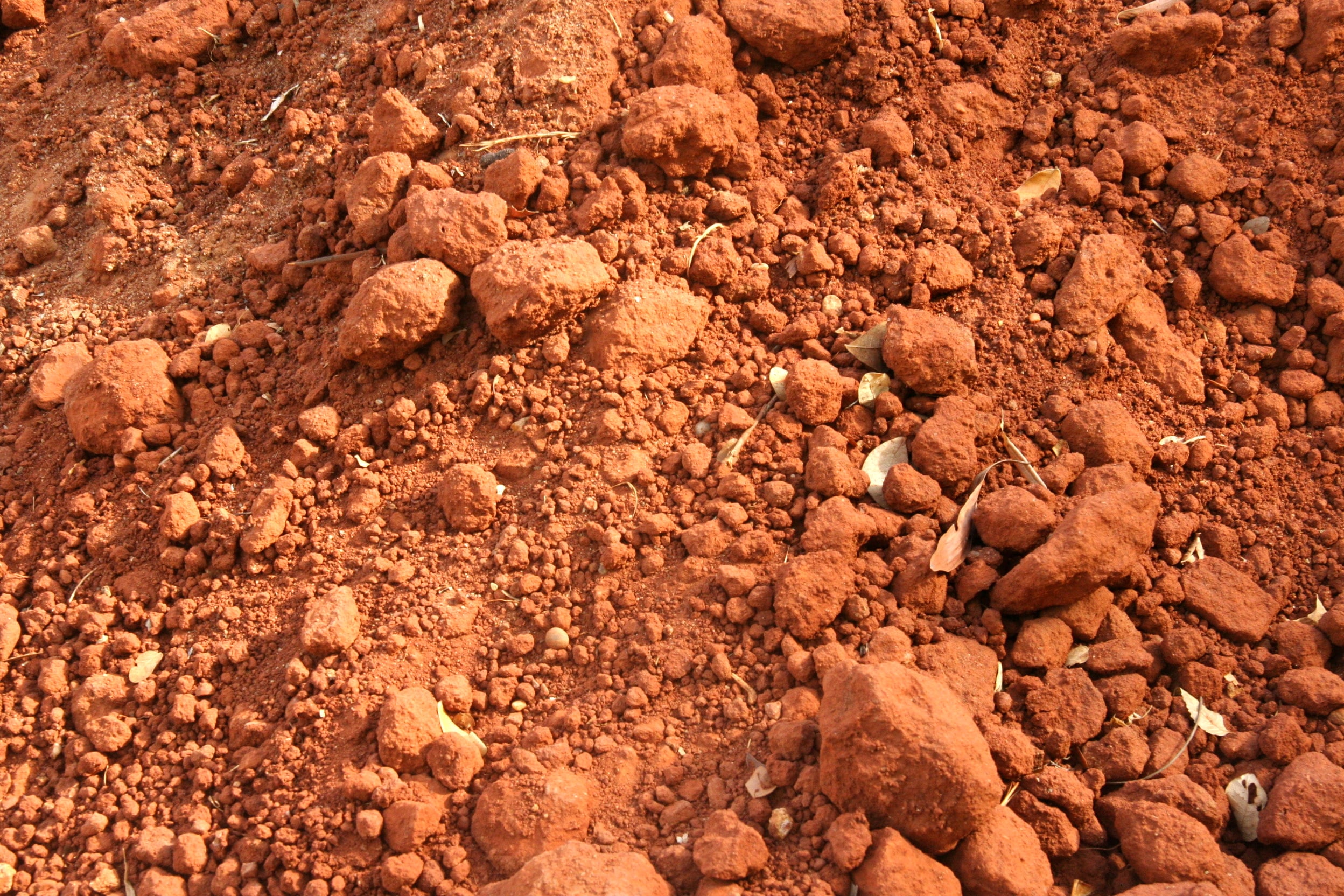
North Carolina’s Piedmont stretches from the foothills of the Appalachian Mountains east to the Coastal Plain, covering roughly 39% of the state’s land area. The dominant soil throughout this region is the Cecil series, a deep, well-drained red clay that spans about 1.6 million acres and was designated the official state soil by the NC legislature in the 1990s. Cecil soil gets its signature red-orange color from iron oxide (rust) that formed as ancient igneous and metamorphic rock weathered over millions of years. While that iron content gives the clay its distinctive look, the soil’s mineral composition is what creates problems for homeowners.
The dominant clay mineral in most NC Piedmont soils is kaolinite, which is relatively stable compared to montmorillonite clays found in states like Texas. Still, kaolinite-based red clay retains moisture, drains poorly, and shifts enough during seasonal weather changes to put serious stress on residential foundations. The ASCE estimates that one quarter of all homes in the United States have sustained some degree of damage from expansive soils, and in North Carolina, Cecil clay accounts for roughly 45% of reported foundation problems statewide.
Key characteristics of NC red clay that affect foundation performance:
- Low porosity: NC red clay is approximately 82% mineral and only 16% pore space, making it slow to absorb and release water. That means moisture tends to sit near the surface and around foundation walls rather than draining away quickly.
- Shrink-swell behavior: During wet months, clay absorbs water and expands, pushing against foundation walls and creating upward pressure (heave). During dry months, the clay contracts and cracks, pulling support away from your foundation and causing settlement. This ongoing cycle can produce uplift pressures up to 5,500 pounds per square foot.
- Acidic pH: Red clay soils typically register a pH below 5.0, which is relevant for any metal foundation component buried in the ground. Acidic soils accelerate corrosion, so proper material selection and protective coatings become a priority.
- Variable depth to bedrock: In the Piedmont, the parent material is typically weathered bedrock known as saprolite. Depth to stable bearing strata can vary dramatically, even across a single property.
“We’ve worked on properties in the NC Piedmont where one corner of the home sits on solid saprolite twelve feet down, and the opposite corner has nothing but soft red clay to thirty feet. That kind of variability is exactly why helical piles outperform traditional foundations in this region. You can verify capacity at each pile location during installation.” – The Team at DeVooght
How NC’s red clay compares to other foundation soils
| Soil Type | Dominant Clay Mineral | Shrink-Swell Risk | Drainage | Common NC Region |
|---|---|---|---|---|
| Cecil Red Clay | Kaolinite | Moderate | Poor | Piedmont (Raleigh, Charlotte, Durham) |
| Iredell “Bull Tallow” | Mixed / High Plasticity | High | Very Poor | Piedmont (Charlotte, Greensboro) |
| Sandhill Soil | Minimal clay | Low | Excellent | Coastal Plain |
| Organic / Histosol | Minimal clay | Low | Very Poor | Tidewater / Coastal Wetlands |
How Do Helical Piles Work in Clay Soil?
Helical pile foundation systems are steel shafts fitted with spiral-shaped bearing plates (helices) that get screwed into the ground using hydraulic rotary equipment. Think of them as giant steel screws that anchor deep below the active zone where seasonal moisture causes the soil to expand and contract. Once installed past that unstable upper layer, the bearing plates lock into denser, more stable strata and transfer the structure’s weight to those deeper layers.
In North Carolina’s red clay, this design solves several problems at once. The active zone of moisture fluctuation in Piedmont clay soils can extend anywhere from a few feet to well over ten feet below grade. Traditional shallow foundations, including standard concrete footings and slab-on-grade systems, sit squarely within this zone. Every time the clay swells or shrinks, those foundations move with it. Helical piles bypass that instability entirely by anchoring below the active zone, where soil conditions remain consistent year-round.
The cohesive nature of clay actually benefits helical pile performance in one important way: clay provides excellent lateral grip on the pile shaft and bearing plates. Unlike loose sandy soils where piles may need extra depth to achieve adequate friction, the dense, sticky quality of red clay gives the helical blades strong resistance from the moment they engage stable material. Research published in the journal Transportation Infrastructure Geotechnology has confirmed that in clay soils, the shaft of the helical pile carries a significant share of the total load, with the shaft’s contribution increasing as clay stiffness rises.
Why helical piles suit red clay conditions:
- Depth adaptability: Each pile is advanced until it reaches target torque values, meaning the system automatically adjusts to the variable bedrock depth that characterizes the NC Piedmont. If one pile hits dense saprolite at 12 feet and another needs to go to 25 feet, the installation process accounts for that difference.
- Minimal soil disturbance: Unlike driven piles or large excavations for poured piers, helical piles are screwed in with very little displacement of surrounding soil. This is a significant advantage in clay, where disturbing the existing soil structure can create new drainage problems and settlement risks.
- Immediate load capacity: There is no concrete to cure and no waiting period for soil consolidation. Helical piles for homeowners can bear structural loads right after installation, which speeds up project timelines for both new construction and foundation repair.
- Verifiable capacity in the field: Torque monitoring during installation provides real-time data about soil strength at each pile location. This built-in quality check is particularly valuable in the Piedmont, where soil conditions can change significantly over short distances.
How Is Helical Pile Capacity Measured in Red Clay?
One of the biggest advantages of helical piles is that their capacity can be verified during installation, not just estimated on paper. The relationship between installation torque and load-bearing capacity was formalized in 1989 by researchers Sam Clemence of Syracuse University and Bob Hoyt of the A.B. Chance Company. Their widely used formula is simple: the ultimate pile capacity (Qult) equals the torque correlation factor (Kt) multiplied by the effective installation torque (T).
The torque correlation factor (Kt) depends primarily on shaft diameter and ranges from 3 to 20, with square shafts typically ranging from 10 to 20 and pipe shafts from 3 to 10. The effective installation torque is measured as the average torque over the last three feet of installed depth, recorded in one-foot increments. As the pile screws into increasingly dense or stiff red clay, the torque rises, and so does the verified capacity.
For NC red clay in particular, soil engineers typically gather data through a Standard Penetration Test (SPT), where a drill rig drives a sampler into the ground and records blow counts per foot. Clay soils with SPT N-values between 10 and 30 represent firm to stiff clay, which is common in the Piedmont. Helical piles perform well in these conditions because the bearing plates engage the clay firmly, and the installation torque correlates reliably with measured capacity. Statistical analysis of the original Hoyt and Clemence data shows that when a safety factor of 2.0 is applied, there is a 94% probability that the actual capacity will meet or exceed the predicted value.
“The torque-to-capacity relationship gives us something that poured concrete foundations simply can’t provide: a verified number at every single pile location. When you’re working in Piedmont clay where conditions vary from one corner of the lot to the next, that verification is not just nice to have. It’s the difference between a foundation that performs for decades and one that starts cracking in five years.” – The Team at DeVooght
Helical pile capacity verification methods compared
| Method | Data Source | Best Used When | Accuracy |
|---|---|---|---|
| Bearing Capacity (Soil Data) | Geotechnical report / SPT borings | Detailed soil data is available | High (with quality data) |
| Torque Correlation | Installation torque monitoring | Soil data is limited or variable | High (94% reliability at FOS 2.0) |
| Static Load Test | Direct measurement under load | High-value or critical structures | Highest |
Hubbell, the manufacturer behind CHANCE certified helical piles, recommends using at least two of these three methods on any project. For NC red clay installations, torque correlation combined with either soil boring data or a load test gives the most reliable results.
What Are the Corrosion Risks for Helical Piles in Acidic Red Clay?
Steel buried in soil will corrode over time, and the acidic nature of NC red clay (pH typically below 5.0) makes corrosion a legitimate concern worth addressing. The good news is that the engineering community has studied this topic extensively, and the data supports long service lives for properly specified helical piles even in moderately corrosive soils.
The ICC-ES Acceptance Criteria 358 (AC358), the governing standard for helical foundation design, defines corrosive soil conditions as those with soil resistivity below 1,000 ohm-cm, pH below 5.5, high organic content, sulfate concentrations above 1,000 ppm, or soils in landfills or mine waste areas. Much of the NC Piedmont’s red clay falls near the pH threshold, which means specifying appropriate protection is important.
Corrosion protection options and expected service life:
- Bare (black) steel with corrosion allowance: Standard structural capacities are calculated assuming a design lifespan of 75 years in most soil conditions. The steel used in helical pile shafts is significantly thicker than what is structurally required because the shaft must resist installation torque. That extra steel provides a built-in corrosion buffer. In practical terms, the amount of steel needed to generate adequate torque far exceeds the amount needed to carry the design load.
- Epoxy powder coating: Adds approximately 16 years to service life beyond bare steel specifications.
- Hot-dip galvanizing (HDG) to ASTM A123/A153: More than doubles the design lifespan of bare steel. With a minimum coating thickness of 3.5 mils, galvanized helical piles can achieve service lives ranging from 50 years in the most aggressive soils to well over 120 years in favorable conditions. The zinc coating corrodes at roughly 1/30th the rate of bare steel, and as zinc corrosion products build up on the surface, they form a protective layer that further slows the process.
- Sacrificial anodes: In particularly aggressive soil conditions, cathodic protection systems can supplement coatings for added longevity.
It is worth noting that galvanized coatings tend to perform better in brown, sandy soils than in gray, clay-rich soils, because larger soil particles wick moisture away faster. For NC red clay installations, helical pile contractors and builders should conduct site-specific soil resistivity and pH testing as part of the geotechnical investigation. This data guides the selection of appropriate corrosion protection for each project.
“We always recommend soil testing before specifying corrosion protection on any Piedmont project. The difference between a Cecil clay site at pH 5.2 and an Iredell clay site at pH 4.8 can change the protection strategy entirely. Spending a few hundred dollars on proper testing can add decades to your foundation’s service life.” – The Team at DeVooght
When Should You Choose Helical Piles Over Traditional Foundations in NC Red Clay?
Not every project in red clay requires helical piles, but several scenarios make them the clear choice. The decision depends on factors like soil variability across your site, the type of work being performed, access constraints, and the long-term performance requirements of the structure.
Situations where helical piles outperform traditional options in NC red clay:
- Foundation repair for settling or cracked structures: When a home’s existing foundation has shifted because of the clay’s shrink-swell cycle, helical piles can stabilize and often lift the structure back toward its original position. Unlike mudjacking or slab repair, helical piles address the root cause by transferring load below the active zone. If you notice signs of foundation problems like sticking doors, cracked walls, or uneven floors, helical piles are often part of the solution.
- Home elevation and house lifting projects: When house lifting services for flood prevention require a new, elevated foundation, helical piles create a strong, deep-anchored base that resists the Piedmont’s soil movement. This is particularly relevant for homes in areas where FEMA flood maps have changed and elevation is now required for insurance compliance.
- New construction on variable soil: When geotechnical borings reveal inconsistent soil conditions across a building site (common in the Piedmont where saprolite depth varies), helical piles allow the builder to achieve verified capacity at each pile location regardless of depth variation.
- Limited-access sites: Helical piles can be installed with compact equipment like rubber-tired backhoes or mini excavators. In tight residential lots typical of older NC neighborhoods, this eliminates the mobilization costs and logistical headaches of large pile-driving rigs or concrete pump trucks.
- Time-sensitive projects: With no concrete curing period and immediate load-bearing capacity, helical pile foundations allow construction to continue the same day. For seasonal projects that need to avoid NC’s wettest months (typically September through March), this compressed timeline offers real value.
Helical piles vs. traditional foundation methods in NC red clay
| Factor | Helical Piles | Poured Concrete Piers | Driven Steel Piles |
|---|---|---|---|
| Adapts to variable soil depth | Yes (installed to torque) | Limited (fixed depth) | Yes (driven to refusal) |
| Field-verified capacity | Yes (torque monitoring) | No | Yes (blow count) |
| Soil disturbance | Minimal | Moderate to high | High (vibration, displacement) |
| Equipment footprint | Small | Moderate | Large |
| Immediate load bearing | Yes | No (curing time) | Yes |
| Removable/adjustable | Yes | No | No |
| Performance in expansive clay | Excellent | Fair (within active zone) | Good |
What Role Does Seasonal Timing Play in NC Red Clay Installations?
The performance of helical pile installations in red clay is influenced by seasonal moisture conditions, and planning around NC’s climate patterns can make a meaningful difference in both installation efficiency and long-term results.
During North Carolina’s wetter months (late fall through early spring), red clay absorbs moisture and softens. While the clay is still workable for helical pile installation during this period, the softer conditions can affect torque readings because the upper soil layers offer less resistance. This does not compromise the final capacity of the pile as long as the bearing plates reach stable strata below the moisture-affected zone. Still, wetter conditions may require slightly deeper installations to achieve target torque values.
During summer dry spells, Piedmont red clay hardens and can become quite dense. Installations during this period may require higher torque to advance through the upper clay layers, but the firmer conditions often result in more consistent torque readings and clearer data about subsurface soil strength. For projects that include both helical pile foundation work and structural lifting or relocation services, coordinating the pile installation with dry-season conditions can reduce overall project complexity.
The transition periods between wet and dry seasons deserve particular attention. The first significant rainfall after a summer drought is one of the most critical moments for existing foundations built on clay. As the dried, cracked clay rapidly reabsorbs water, it can cause sudden, uneven swelling that cracks foundation walls and shifts structures. Helical piles are built to resist this type of soil movement because their bearing surfaces sit below the depth where these moisture fluctuations occur.
“Timing matters in the Piedmont, but not the way most homeowners think. We can install helical piles year-round in NC red clay. The real timing question is how quickly you address foundation movement once you notice it. Every shrink-swell cycle your home goes through without proper support makes the problem worse and the repair more expensive.” – The Team at DeVooght
What Should Homeowners Know Before Specifying Helical Piles in NC Red Clay?
Choosing helical piles is a strong decision for most Piedmont properties, but getting the best results requires proper planning. A few upfront steps can significantly affect your project’s outcome, cost, and long-term performance.
Pre-installation considerations for NC red clay projects:
- Get a geotechnical investigation: A professional soil boring provides data on soil classification, moisture content, bearing capacity, depth to stable strata, pH, and resistivity. This information allows the engineer to select the right shaft size, helix configuration, target depth, and corrosion protection. While helical pile capacity can be determined through torque alone (with a higher safety factor), combining soil data with torque correlation gives the most reliable design.
- Identify your soil series: Not all NC red clay is the same. Cecil soil (the most common) behaves differently from the Iredell series (“bull tallow”), which has higher plasticity and poorer drainage. Your soil series affects drainage design, corrosion specifications, and expected seasonal movement patterns.
- Consider the active zone depth: In the Piedmont, the zone where seasonal moisture changes affect soil volume can extend from 3 to over 10 feet below grade. Helical pile bearing plates should be installed well below this zone. Your geotechnical engineer can determine the active zone depth for your specific site based on soil borings and local climate data.
- Plan for drainage: Even with helical piles anchored below the active zone, managing surface water around your foundation reduces the severity of clay movement at the surface and protects any above-grade foundation components. Proper grading, gutter systems, and drainage channels complement the pile system.
- Work with an experienced home elevation company: Helical pile installation in clay requires operators who understand torque monitoring, soil behavior, and the specific challenges of NC’s geology. A CHANCE certified installer has the training and equipment to handle the variability that Piedmont soils present.
Conclusion
North Carolina’s red clay creates real, measurable challenges for residential and commercial foundations, but helical piles are engineered to handle exactly these conditions. By anchoring below the active moisture zone, verifying capacity through torque monitoring at each pile location, and offering corrosion protection options suited to acidic clay soils, helical piles give NC property owners a foundation system built for long-term stability. The DeVooght team brings hands-on experience with Piedmont soil conditions and helical pile installation to every project, whether it involves new construction, foundation stabilization, or home elevation. If you need help with foundation services or house lifting, contact the DeVooght team to discuss your project and get a professional assessment of your property’s soil conditions.