
Choosing between helical piles and drilled shafts is one of the most consequential decisions you will make on any deep foundation project. Both systems transfer structural loads from unstable surface soil to stronger strata below, but they do it in fundamentally different ways. The right pick affects your budget, your timeline, and the long-term stability of your structure. Whether you are planning a house lifting project for flood prevention, building a new coastal home, or stabilizing a commercial property, understanding these two options will help you make a confident, informed choice.
What Is the Difference Between a Helical Pile and a Drilled Shaft?
Before comparing cost, speed, and performance, it helps to understand what each system actually is and how it gets into the ground.
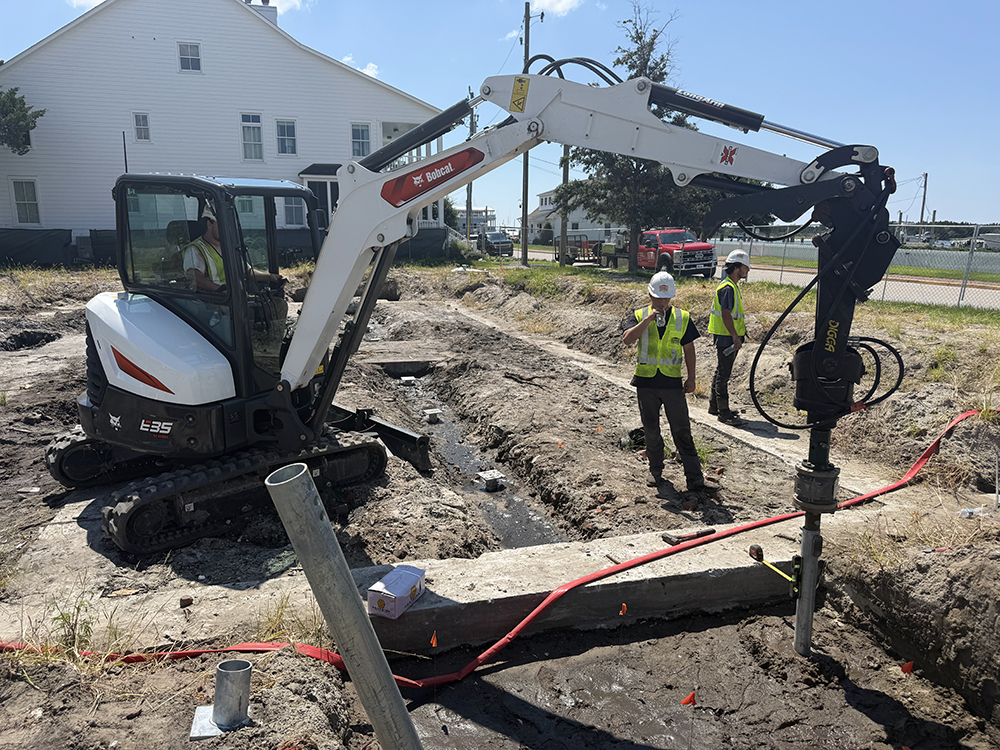
A helical pile (also called a helical pier or screw pile) is a steel shaft with one or more helix-shaped bearing plates welded to it. A hydraulic motor rotates the pile into the soil, much like turning a large screw into wood. Because the pile displaces soil rather than removing it, installers sometimes call it a “displacement foundation.” The helix plates bear against load-carrying soil layers such as stiff clay, firm sand, or residual soil above bedrock. Capacity is confirmed in real time by measuring installation torque, so the crew knows precisely how much load each pile can support the moment it reaches depth.
A drilled shaft (also called a drilled pier, bored pile, or caisson) works the opposite way. A drill rig bores a cylindrical hole into the ground, removes the soil, and replaces it with reinforced concrete. The shaft can be straight or belled at the bottom. Load capacity comes from friction along the sides of the concrete column, from end bearing at the base, or from a combination of the two. Because the concrete needs time to cure, a drilled shaft cannot accept structural loads right away.
Side-by-Side Overview of Helical Piles and Drilled Shafts
| Feature | Helical Piles | Drilled Shafts |
|---|---|---|
| Material | High-strength galvanized steel | Reinforced concrete |
| Installation method | Rotated (screwed) into ground | Hole drilled, concrete poured |
| Capacity verification | Real-time torque measurement | Estimated from soil boring data |
| Load-bearing timing | Immediately after install | 7 to 28 days (concrete cure) |
| Weather sensitivity | Installed year-round | Affected by rain, freezing, heat |
| Soil disturbance | Minimal (displacement) | Significant (removal and replacement) |
| Reusability | Can be removed and reused | Permanent, not removable |
“We see this question every week from homeowners and engineers alike. Helical piles and drilled shafts both solve the same problem, but the path they take to get there matters a lot for your timeline, your budget, and the long-term health of your foundation.” – The Team at DeVooght
How Do Helical Piles and Drilled Shafts Compare on Cost?
Cost is usually the first question people ask, and the honest answer is that the sticker price alone does not tell the full story. The per-unit cost of a helical pile is often slightly higher than a drilled shaft, but when you add up labor, equipment, cure time, weather delays, site cleanup, and mobilization, helical piles frequently come out ahead on total project cost.
Installed helical pile prices typically fall between $1,500 and $4,000 per pier, depending on shaft diameter, number of helix plates, required depth, and soil conditions. For residential foundation work, most homeowners see costs around $1,500 to $2,000 per pier for materials alone, with total installed costs (including labor) reaching roughly $2,000 to $3,000 per pier. On the drilled shaft side, installed costs range from $100 to $300 per linear foot, which can add up quickly for deeper installations. A 20-foot drilled shaft at $150 per linear foot, for example, comes to $3,000 per shaft before factoring in concrete cure time or spoil removal.
Typical Cost Ranges for Residential and Light Commercial Applications
| Cost Category | Helical Piles | Drilled Shafts |
|---|---|---|
| Materials per unit | $1,500 – $2,000 | $1,000 – $2,500 |
| Labor per unit | $500 – $2,000 | $800 – $2,500 |
| Total installed per unit | $2,000 – $4,000 | $2,000 – $6,000+ |
| Concrete cure time cost | $0 (none needed) | 7-28 days of project delay |
| Spoil removal | Minimal to none | Significant (disposal fees apply) |
| Site restoration | Little to no landscaping repair | Often requires regrading and repair |
Where the real savings show up is in indirect costs. A drilled shaft project may sit idle for two to four weeks while concrete cures. During that window, general contractors, subcontractors, and other trades cannot proceed with work that depends on the foundation. Those holding costs add up. Helical piles accept full structural loads the moment installation is complete, which means the rest of the project can move forward the same day. One widely cited case study from Hubbell Power Systems documented an estimated 80% cost savings when a project team switched from drilled shafts to helical piles. While that figure represents one specific scenario, it illustrates how total project economics can shift dramatically once you account for time, labor, and equipment.
“When we sit down with a homeowner to talk about helical pile foundation installation, the upfront number is only part of the conversation. We walk through the full picture: how many days the project adds to the timeline, what equipment needs to come on site, and what cleanup looks like afterward. That is where helical piles consistently save money.” – The Team at DeVooght
Which Foundation System Is Faster to Install?
Speed is where helical piles have a clear, well-documented advantage. The installation process is straightforward: a hydraulic drive head mounted on an excavator or skid steer rotates each pile into the ground until the helix plates reach load-bearing soil. A typical residential pier takes minutes to install. A full-home foundation project with 30 to 50 piles can often be completed in a single day or two.
Drilled shafts require more steps. The drill rig bores each hole, the crew lowers a reinforcing steel cage, and then the concrete is poured. If the water table is high or the soil is unstable, a temporary steel casing or drilling slurry may be needed to keep the hole from collapsing. After the pour, the concrete needs to cure to at least 75% of its design strength before any loads can be applied, a process that takes a minimum of seven days and can stretch to 28 days under adverse conditions.
Key speed differences between helical piles and drilled shafts:
- Immediate load capacity: Helical piles can accept full structural loads the same day they are installed. Drilled shafts require a minimum of seven days to begin supporting weight.
- Weather independence: Helical pile installation proceeds in rain, snow, freezing temperatures, and high heat. Concrete pours are sensitive to all of these conditions, and adverse weather can delay a drilled shaft project by days or weeks.
- Equipment footprint: Helical piles can be installed with compact hydraulic equipment that fits into tight spaces and residential lots. Drilled shafts require a drill rig plus a concrete truck, which together can weigh more than 66,000 pounds and need substantial access clearance.
- Crew size: A helical pile crew typically consists of two to three workers and one machine. Drilled shaft work often requires a larger team with specialized skills for drilling, casing, cage placement, and concrete pouring.
For homeowners working through a structural relocation and lifting project or a flood recovery situation, the timeline difference can be the deciding factor. When your family is displaced or your property is at risk, cutting weeks off the foundation phase makes a meaningful impact on when you can return home or bring a building back into service.
How Does Performance Compare in Different Soil Conditions?
Both helical piles and drilled shafts can deliver strong, long-lasting support, but their performance profiles differ depending on what is happening underground. Understanding how each system behaves in your specific soil helps you avoid costly surprises down the road.
Performance factors to evaluate when comparing helical piles and drilled shafts:
- Verified capacity vs. estimated capacity: Helical pile capacity is confirmed during installation by measuring the torque required to advance the pile. If the installer encounters soil conditions that differ from the geotechnical boring, the torque readings reveal it immediately. The crew can add or subtract shaft extensions, switch to a different lead section, or adjust helix plate sizes on the spot. Drilled shafts, by contrast, can only offer estimated capacity based on the soil boring data collected before construction. If actual conditions differ from what was expected, the options for adjustment are more limited and more expensive.
- Behavior in expansive soils: When clay-rich soils expand and contract with moisture changes, they create what engineers call negative skin friction, or down-drag. This force pulls downward on any foundation element that has large surface area in contact with the surrounding soil. Drilled shafts, with their wide diameters, are particularly vulnerable to down-drag because they have a lot of surface area touching expansive soil. Helical piles have much slender shafts, so they experience far less negative skin friction in the same conditions.
- Performance in sandy or waterlogged soil: Drilled shafts struggle in very sandy soil because the borehole can collapse before concrete is placed. Groundwater adds another complication, sometimes requiring dewatering or casing that increases both cost and complexity. Helical piles are not affected by sandy soil or high water tables in the same way, since they are screwed directly into position without creating an open hole.
- Limitations in dense rock: Drilled shafts have an advantage when the project requires bearing directly on bedrock or transferring extremely heavy loads through dense, rocky strata. A single large-diameter drilled shaft can sometimes replace a group of smaller helical piles, simplifying the pile cap design. For very heavy commercial or infrastructure loads, drilled shafts may be the better fit.
Soil Condition Suitability Comparison
| Soil Condition | Helical Piles | Drilled Shafts |
|---|---|---|
| Soft or loose soil | Excellent | Good (may need casing) |
| Expansive clay | Excellent (low down-drag) | Vulnerable to negative skin friction |
| Sandy soil | Excellent | Challenging (borehole collapse risk) |
| High water table | No impact on installation | Requires dewatering or casing |
| Dense rock / bedrock | May need modified lead sections | Excellent (can bear directly on rock) |
| Flood zones | Ideal for elevated structures | Functional but slower to install |
“Soil conditions change. We have been on jobs where the geotechnical report said one thing and the ground said something else entirely. With helical piles, we adjust in real time based on torque readings. That kind of adaptability is something concrete in a hole just cannot match.” – The Team at DeVooght
What Are the Environmental Differences Between These Foundation Types?
As coastal communities face rising seas and stricter environmental regulations, the ecological footprint of foundation work is getting more attention from homeowners, builders, and municipalities alike. On this front, helical piles and drilled shafts have very different profiles.
Drilled shafts are concrete-intensive. The production of Portland cement, the primary ingredient in concrete, is one of the largest industrial sources of CO2 emissions globally. A single drilled shaft project can consume thousands of gallons of water for concrete mixing and curing, and the drilling process itself generates spoils (excavated soil) that need to be hauled away and disposed of, adding truck traffic, fuel consumption, and disposal fees to the project.
Helical piles produce no spoils, require no concrete, and consume no water during installation. Because the piles are rotated into position rather than hammered or drilled, noise and vibration levels stay low, which matters in residential neighborhoods, near hospitals, around schools, and in ecologically sensitive areas like wetlands and wildlife corridors. Research from US Helicals notes that helical systems can reduce a project’s carbon footprint by 70% to 85% compared to traditional concrete foundation methods. Helical piles can also be removed at the end of a structure’s useful life and either reused on another project or recycled as steel, supporting a more circular approach to construction.
Environmental factors that separate helical piles from drilled shafts:
- Zero concrete required: Helical piles eliminate the CO2 emissions, water consumption, and chemical runoff associated with concrete production and placement.
- No spoil disposal: Because the installation displaces soil instead of removing it, there are no truckloads of excavated material to haul off site. This reduces fuel use and avoids landfill disposal fees.
- Low noise and vibration: The rotational installation method is far quieter than a drill rig or pile driver, which makes helical piles a better fit for sensitive settings.
- Reusable and recyclable: Steel helical piles can be unscrewed from the ground and used again, or recycled at end of life. Concrete shafts are permanent and generate demolition waste if a structure is removed.
- Minimal site disturbance: The small equipment footprint preserves existing native vegetation and landscaping, which is particularly important during coastal home elevation projects.
For homeowners in flood zones along the coasts of North Carolina, South Carolina, New Jersey, and Wisconsin, these environmental benefits often align with local permitting requirements. Many coastal municipalities now favor foundation methods that minimize soil disturbance and protect adjacent waterways, giving helical piles a practical regulatory advantage as well.
When Should You Choose Helical Piles Over Drilled Shafts?
Neither system is universally better. The right choice depends on the specifics of your project: what you are building, where you are building it, what the soil looks like, and how quickly you need the foundation in place. That said, there are clear scenarios where one option pulls ahead.
Situations where helical piles are typically the stronger choice:
- Residential house lifting and home elevation: When a home needs to be raised above flood level, helical piles provide a fast, stable foundation that can be loaded immediately. This is particularly valuable for elevating a house onto pilings in flood-prone coastal areas. DeVooght is a CHANCE certified helical pile installer, which means every installation follows manufacturer-specified engineering standards.
- Tight or restricted job sites: Older neighborhoods, properties with mature trees, and lots with limited access roads all favor the compact equipment used for helical pile installation.
- Projects on a tight timeline: If weather delays or long cure times could push your project past a critical deadline, the install-and-load-immediately nature of helical piles removes that risk.
- Unstable, sandy, or waterlogged soil: Helical piles are unaffected by high water tables, and they perform well in the sandy, shifting soils common along the Atlantic coast.
- Environmentally sensitive sites: Wetlands, areas adjacent to coastal wildlife corridors, and properties near protected waterways benefit from the zero-spoil, low-vibration installation process.
Situations where drilled shafts may be more appropriate:
- Extremely heavy structural loads: Large commercial buildings, bridges, and multi-story structures that place very high concentrated loads on each foundation point may benefit from the massive diameter and bearing capacity of drilled shafts.
- Projects bearing directly on bedrock: When the design calls for a foundation element to sit directly on rock, drilled shafts allow the bottom of the hole to be inspected and cleaned before the concrete pour, confirming a solid bearing surface.
- Dense or rocky subsurface conditions: While modified helical lead sections can handle many rock conditions, extremely dense or heavily layered rock formations may favor the drilling method.
Decision Matrix: Choosing Between Helical Piles and Drilled Shafts
| Project Factor | Favors Helical Piles | Favors Drilled Shafts |
|---|---|---|
| Timeline urgency | Yes (immediate load capacity) | No (requires cure time) |
| Budget sensitivity | Yes (lower total project cost) | Depends on scale |
| Soil is sandy, wet, or expansive | Yes | No |
| Bearing on bedrock needed | Possible with modifications | Yes (ideal) |
| Residential or mid-scale project | Yes | Often oversized for the job |
| Heavy infrastructure (bridges, high-rises) | Possible in groups | Yes (single shaft can replace pile groups) |
| Environmental restrictions | Yes (zero spoils, low impact) | No (concrete, spoils, noise) |
How Does the Screw Pile Market Reflect Industry Confidence?
The global screw pile market, valued at roughly $1.8 billion in 2024, is projected to reach $3.2 billion by 2033, growing at a compound annual growth rate (CAGR) of 7.5%. That growth is not happening by accident. It reflects a construction industry that is moving toward faster installation methods, lower environmental impact, and more predictable performance verification. Residential and commercial building applications make up the largest share of that market, with renewable energy projects (especially solar array foundations) adding significant demand.
In the United States in particular, the number of helical pile manufacturers has grown substantially since the early 2000s, when the market was under $100 million. Today, manufacturers like Hubbell (CHANCE), Earth Contact Products, Foundation Supportworks, and others serve a much wider range of applications, from single-family home elevation projects to boardwalks, utility installations, and commercial developments. This expansion reflects growing confidence among structural engineers and contractors that helical piles deliver reliable, verifiable performance across a broad range of conditions.
“We have watched this technology grow from a niche product into a trusted foundation solution used on thousands of projects every year. As a certified CHANCE installer, we have seen firsthand how the engineering behind helical piles has matured, and how much more comfortable engineers, building officials, and homeowners have become with the data these systems produce.” – The Team at DeVooght
What Questions Should You Ask Before Choosing a Foundation System?
Whether you are leaning toward helical piles or drilled shafts, the quality of your outcome depends on the quality of your planning. Before committing to either system, ask your foundation contractor and your structural engineer these questions to make sure the chosen method fits your specific project.
Questions to ask before selecting a deep foundation method:
- What does the geotechnical report say about soil conditions at depth? The answer determines which system can reach competent bearing soil most efficiently. If the report shows sandy or expansive clay layers, helical piles are likely the better match. If it shows shallow bedrock, drilled shafts may be worth considering.
- What is the total project cost, not just the per-unit cost? Ask your contractor to include mobilization, equipment, labor, cure time delays, spoil disposal, site restoration, and any weather contingency in the estimate. This gives you a true comparison.
- How will foundation capacity be verified? Helical piles produce real-time torque data that confirms capacity during installation. Ask what verification method a drilled shaft contractor uses and how they handle situations where soil conditions differ from the boring report.
- What is the installation timeline, and how does weather affect it? For coastal projects in areas prone to storms, or for projects during certain seasons, weather resilience can be a major practical factor.
- Does the installer carry proper certifications? For helical piles, look for a certified installer who follows manufacturer specifications. For drilled shafts, confirm the contractor has experience with the required shaft diameters and depths.
- What are the environmental and permitting implications? In flood zones and coastal areas, local codes may restrict excavation, spoil generation, or work near waterways. Helical piles often satisfy these restrictions more easily.
Taking time to work through these questions with your contractor and engineer will save you from unexpected costs and delays. At DeVooght, we walk every client through this process because the foundation is not the place to cut corners or make assumptions. Our team of structural moving and lifting professionals has the field experience to help you match the right system to your project’s demands.
Conclusion
For most residential and mid-scale commercial projects, especially those in coastal flood zones, on challenging soil, or under tight timelines, helical piles deliver a combination of speed, verified performance, and lower total project cost that drilled shafts cannot match. Drilled shafts still have a role where extremely heavy loads or direct bedrock bearing are required, but for the types of projects homeowners and local builders encounter most often, helical piles are the more practical and cost-effective foundation solution.
The DeVooght team specializes in helical pile installation, house lifting, and structural relocation across New Jersey, North Carolina, South Carolina, and Wisconsin. If you need help with a deep foundation project or home elevation, contact us to talk through your options with an experienced team that has been doing this work for decades.