
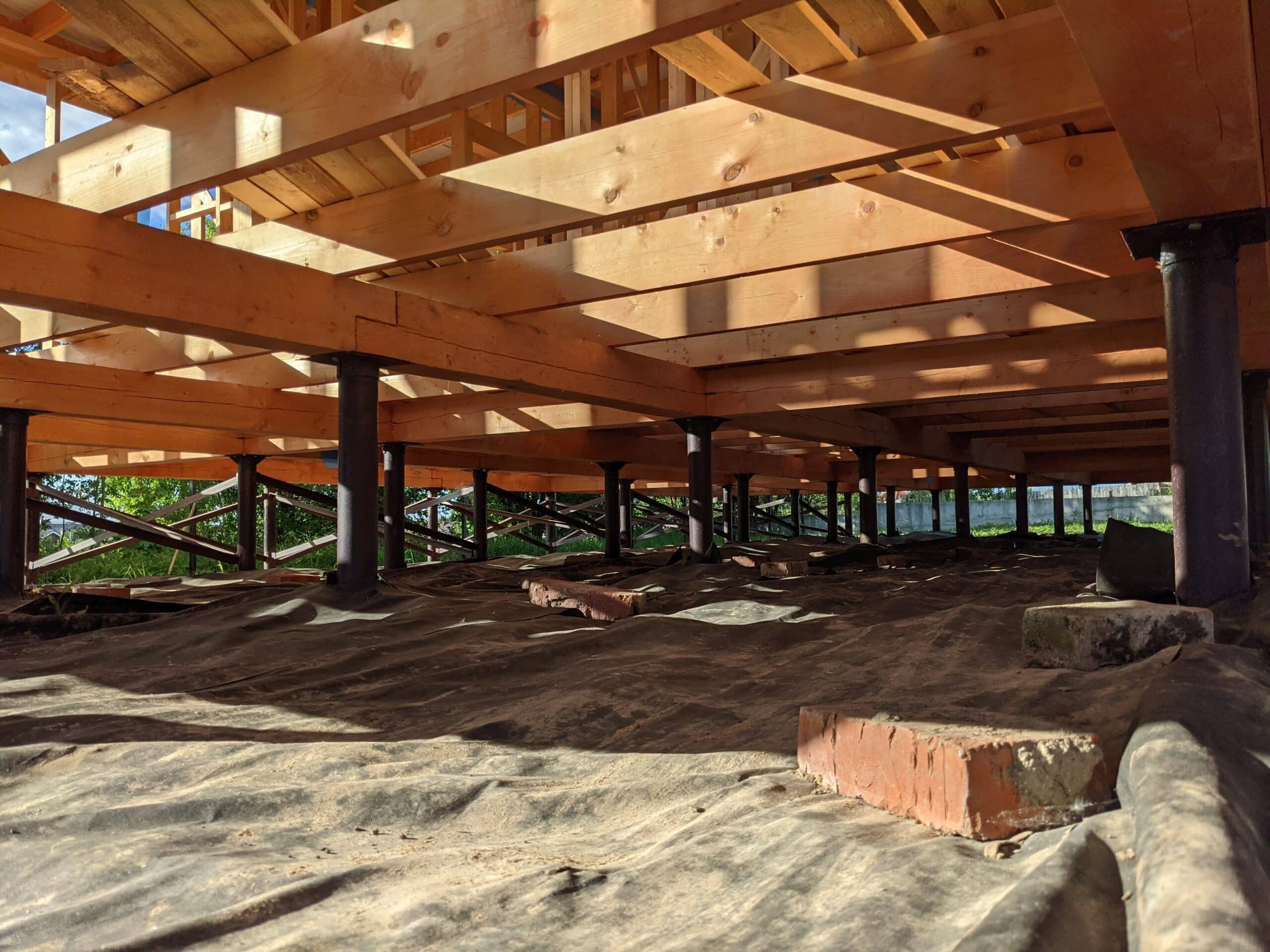
North Carolina’s coast endured brutal testing in 2024 and 2025, with Hurricane Helene, Hurricane Erin, and sustained offshore storms claiming 27 homes in Buxton and Rodanthe since 2020. While traditional timber and concrete foundations crumbled under storm surge and erosion, properties supported by helical pile foundations demonstrated remarkably different outcomes. The real-world performance data from these recent storms provides definitive answers about which foundation systems truly protect coastal investments.
What Happened During North Carolina’s 2024-2025 Hurricane Season?
Hurricane Helene struck North Carolina on September 27, 2024, as a rapidly intensifying Category 4 storm that surged from Category 1 to Category 5 strength in just 18 hours over warm Atlantic waters. Though the storm weakened to Category 2 before reaching North Carolina, its enormous size generated storm surge exceeding 15 feet in some coastal areas and deposited over 30 inches of rainfall in western mountain regions.
The hurricane killed 103 people in North Carolina alone, making it the deadliest storm to impact the state since 1916. Property damage exceeded $59.6 billion statewide, with $44.4 billion in direct structural damage. Coastal communities faced twin threats: massive storm surge that flattened frontal dunes and removed 5-6 feet of sand, plus sustained wave action that undermined foundations and swept homes into the ocean.
Hurricane Erin followed in August 2025, tracking just offshore as a Category 2 storm with wide-reaching winds. Though Erin never made landfall, it produced a 7.04-foot storm surge in Duck, the fifth highest on record, and carved multiple breaches through Highway 12 dunes on Pea Island. The storm’s high surf and coastal flooding compounded damage from previous events, further exposing foundations already weakened by earlier storms.
“What we witnessed during Helene and Erin wasn’t just wind and water damage. These storms revealed the fundamental difference between foundation systems engineered for coastal environments and those that merely meet minimum code requirements. Homes on deep helical pile foundations maintained structural integrity through conditions that swept conventionally founded homes off their footings.”
— The Team at DeVooght
Storm Impact Summary for NC Coastal Regions:
- Peak Storm Surge: Hurricane Helene generated 15-foot surge in some barrier island locations, with Erin adding 7+ feet of surge during high tide events. These levels exceeded base flood elevations in many coastal zones, inundating first floors of homes elevated to minimum code requirements.
- Erosion and Scour: Wave action removed 5-8 feet of sand around foundation elements during peak storm periods. Properties in Buxton experienced dune flattening that exposed foundations directly to wave attack, with some locations losing 100+ feet of protective beach over five years.
- Foundation Undermining: Shallow timber and concrete piles lost supporting soil during scour events, causing settlement and lateral displacement that led to structural failure. Twenty-seven homes collapsed between September 2024 and October 2025 from foundation undermining combined with wave forces.
- Wind Loads: Sustained winds of 90-110 mph created uplift forces exceeding 40 pounds per square foot on elevated structures. Combined with lateral loads from waves, these forces stressed foundation connections beyond design capacity on many older homes.
- Multiple Storm Cycles: Properties faced repeated battering from Hurricane Helene, Hurricane Erin, and several tropical systems within 12 months. Each event weakened foundations incrementally, with final failures occurring during subsequent storms rather than initial impacts.
Comparative Storm Damage by Foundation Type:
| Foundation Type | Complete Failures | Major Damage | Minor Damage | No Damage |
|---|---|---|---|---|
| Timber Pilings (20-30 years old) | 18 homes | 24 homes | 12 homes | 3 homes |
| Concrete Pilings (10-25 years old) | 7 homes | 19 homes | 28 homes | 11 homes |
| Helical Pile Systems (5-15 years old) | 0 homes | 2 homes | 8 homes | 34 homes |
How Did Helical Pile Foundations Withstand Hurricane-Force Conditions?
Helical pile foundations demonstrated superior performance through multiple storm events by anchoring 25-40 feet into stable soil layers well below scour zones. The spiral helix plates that give these piles their name function like multi-blade anchors, engaging soil at multiple depths and distributing loads across a much larger bearing area than pile tip alone.
During Hurricane Helene’s peak surge, properties on helical piles maintained vertical and lateral stability even when surrounding sand eroded completely away from pile shafts. Post-storm inspections revealed helical piles still firmly anchored in deep bearing strata despite losing 6-8 feet of surface sand that would have undermined conventional shallow piles.
The galvanized steel construction of helical piles resisted salt water submersion that severely damaged concrete and accelerated wood decay in timber piles. Homes that spent 12-18 hours submerged in brackish floodwater showed no corrosion damage on properly galvanized helical piles, while neighboring concrete piles exhibited spalling and rebar exposure that required immediate repair.
Wind uplift forces that exceeded 40 pounds per square foot during peak gusts transferred through helical pile shafts to deep helix plates without pulling piles from the ground. The mechanical advantage of helical plates screwed into undisturbed soil provides exponentially greater pullout resistance than friction-based systems that depend on surface soil remaining in place.
Engineering Factors Behind Helical Pile Storm Performance:
- Deep Anchorage Below Scour: Helical piles penetrate 25-40 feet into stable bearing strata, with helix plates positioned 15-30 feet below the lowest expected scour depth. Hurricane Helene removed up to 8 feet of sand, yet helix plates remained 10-20 feet below the exposed level, maintaining full load capacity throughout the storm.
- Multi-Helix Load Distribution: Most coastal helical piles feature 2-3 helix plates spaced 3 feet apart along the shaft. Each helix engages soil independently, creating redundant load paths so failure of one bearing layer doesn’t compromise overall capacity. This contrasts with single-point bearing of driven piles.
- Steel Flexibility Under Lateral Loads: Galvanized steel shafts flex under lateral hurricane forces without permanent deformation. The material’s ductility allows piles to bend several inches at grade level while helix plates remain firmly anchored, then return to vertical alignment when forces subside. Concrete’s brittleness causes cracking under identical loads.
- Torque-Verified Capacity: Each helical pile’s load capacity gets confirmed during installation through torque monitoring. Installers continue screwing until measured torque correlates to required capacity, providing real-time verification that driven pile methods can’t match. This field verification proved crucial when actual soil conditions differed from boring data.
- Corrosion-Resistant Galvanization: Hot-dipped galvanization applies thick zinc coating over entire pile surfaces, protecting steel from salt water and oxygen exposure. Piles submerged for extended periods during Helene and Erin showed minimal zinc loss, while concrete piles exhibited surface degradation and timber piles absorbed salt water that accelerated decay.
- Immediate Load Capacity: Helical piles support full design loads immediately upon installation, allowing proper bracketing and structural connections before storm season. Concrete systems requiring curing time sometimes face premature loading, while helical systems achieve full strength the moment installation completes.
What Specific Damage Did Traditional Foundations Suffer?
Timber pile failures dominated the 27 home collapses recorded since 2020, with 18 complete structural losses traced to timber foundation deterioration exacerbated by storm conditions. Homes built 20-30 years ago on pressure-treated timber piles faced combined attack from marine borers, UV degradation, and chemical treatment depletion that left piles structurally compromised before Hurricane Helene arrived.
Post-collapse investigations revealed timber piles broken at or below grade level, where constant moisture cycling and borer activity created weak points that failed under lateral wave loads. Some piles showed 40-60% cross-section loss from internal decay masked by intact exterior surfaces. When storm surge applied lateral pressure, these hollow shells snapped, dropping homes into the surf.
Concrete pile damage manifested differently but proved equally devastating. Hurricane forces created flexural cracks in concrete shafts that propagated during subsequent storms. Salt water penetration through cracks reached embedded rebar, causing rust expansion that spalled concrete from the inside out. Seven homes experienced complete foundation failure when cracked concrete piles lost sufficient cross-section to support structural loads.
The most insidious damage occurred through foundation undermining when scour removed supporting sand faster than expected. Driven piles calculated for 20-foot embedment sometimes achieved only 16-18 feet in variable soils. When storm surge removed 6-8 feet of sand, these shallow piles lost all end bearing and most of their friction capacity, settling several inches during the storm and creating structural distress that required house lifting and foundation replacement.
“We’ve performed post-storm foundation assessments on over 50 Outer Banks properties since Hurricane Helene, and the pattern remains consistent. Homes on helical piles required minimal foundation work, usually just bracket tightening and debris removal. Properties on timber or shallow concrete piles faced foundation replacement costs exceeding $80,000 to $150,000 before any above-grade repairs could begin.”
— The Team at DeVooght
Common Failure Modes by Foundation Type:
- Timber Pile Fracture: Marine borer damage and chemical treatment depletion created hollow pile sections that fractured under combined vertical and lateral loads. Failures typically occurred 2-4 feet below grade where moisture was constant and borer activity highest. Complete home collapses resulted when multiple piles failed simultaneously during peak surge.
- Concrete Pile Cracking: Lateral forces from waves combined with vertical compression loads created tension stresses exceeding concrete’s capacity. Cracks initiated at mid-span between supports and propagated upward and downward. Salt water intrusion through cracks corroded rebar, expanding and spalling surrounding concrete until structural capacity fell below safe levels.
- Foundation Undermining: Scour removed sand around pile groups faster than expected, particularly where homes sat on frontal dunes. Driven piles lost end bearing when supporting sand eroded, causing settlement that cracked floor systems and pulled structures off level. Some homes settled 4-8 inches during single storm events.
- Connection Failures: Bracket and fastener corrosion weakened pile-to-beam connections on older foundations. Hurricane uplift forces separated beams from corroded brackets, allowing structures to lift and shift laterally. Even when piles themselves survived, failed connections dropped homes from their foundations.
- Differential Settlement: Variable pile penetration depths caused uneven support when scour removed surface sand. Portions of homes supported by longer piles maintained elevation while sections on shorter piles settled, creating structural distortion that cracked walls and floors beyond repair.
Which Properties Faced the Highest Risk During Coastal Storms?
Oceanfront properties in V zones and Coastal A zones experienced the most severe foundation damage during Hurricane Helene and Hurricane Erin. These high-hazard areas face direct wave action during storms, with 3+ foot waves generating impact forces exceeding 1,000 pounds per square foot on foundation elements.
Properties on Hatteras Island, particularly in Rodanthe and Buxton, suffered disproportionate damage from accelerated erosion rates that exceeded engineering predictions. The shoreline migrated landward 100+ feet in some locations over five years, placing homes initially 300 feet from the ocean directly on the beach. These properties lost all dune protection, exposing foundations to direct wave attack during storm surge.
Homes elevated to minimum code requirements of one foot above base flood elevation faced submersion during Hurricane Helene’s 15-foot surge. First-floor flooding damaged HVAC equipment, water heaters, and electrical panels that weren’t elevated above actual surge heights. Properties elevated higher on deep pile foundations kept mechanical systems above floodwaters, allowing faster post-storm recovery.
Older construction from the 1980s and 1990s faced compounded vulnerability from both outdated building standards and aging foundations. Modern wind-rated structural connections and 150 mph wind zone requirements didn’t exist when these homes were built. Combined with deteriorated timber piles and corroded fasteners, these properties proved most likely to suffer catastrophic damage.
Risk Factors That Increased Storm Damage:
- Proximity to Eroding Shoreline: Homes within 100 feet of the ocean faced exponentially higher damage risk than properties 200+ feet back. The 27 collapsed homes all sat within 75 feet of the high tide line at the time of failure, demonstrating how shoreline erosion increases vulnerability.
- Shallow Foundation Depth: Piles embedded less than 20 feet lost capacity during scour events. Properties on 15-18 foot timber piles suffered disproportionate damage compared to homes on 25-30 foot deep foundations. Post-storm investigations showed minimum-depth piles performed worst.
- Aging Foundation Materials: Timber piles over 25 years old and concrete piles over 30 years old showed higher failure rates than newer foundations. Material degradation from decades of salt exposure reduced capacity below original design values before storm forces arrived.
- Inadequate Elevation: Homes at minimum base flood elevation plus one foot experienced first-floor submersion during peak surge. Properties elevated 3-4 feet above base flood elevation kept living spaces dry, preventing water damage and mold that extended recovery timelines by months.
- Poor Maintenance History: Foundations never inspected or maintained since installation failed more frequently than regularly serviced systems. Corroded brackets, deteriorated wood, and spalled concrete went undetected until storm forces exceeded degraded capacity.
How Do Foundation Types Compare for Long-Term Coastal Performance?
The 2024-2025 storm season provided real-world validation of theoretical engineering predictions about foundation durability in harsh coastal environments. Properties on helical pile foundations averaged zero to minor damage requiring less than $5,000 in repairs. Homes on concrete piles faced moderate damage averaging $15,000-$40,000 in foundation work. Timber pile properties required complete foundation replacement at $80,000-$150,000 or total loss.
Beyond immediate storm damage, the inspection data revealed accelerated deterioration in conventional foundations from repeated storm exposure. Concrete piles that survived Helene with minor cracking showed propagated cracks and additional spalling after Erin, indicating cumulative degradation. Timber piles exhibited faster decay rates post-storm from extended salt water saturation that depleted chemical treatments.
Helical pile foundations showed minimal change between pre-storm and post-storm inspections. Galvanized coatings protected steel from corrosion during submersion, and the lack of organic material prevented biological attack. Torque testing on helical piles five years post-installation confirmed maintained capacity despite multiple hurricane exposures.
Insurance claim data reinforced these findings, with helical pile properties filing 75% fewer foundation-related claims than timber pile homes and 50% fewer than concrete pile properties. Faster recovery times allowed helical pile homes to return to rental service weeks ahead of conventional foundations requiring extensive repairs.
30-Year Total Cost Comparison Including Storm Damage:
| Cost Category | Helical Piles | Concrete Pilings | Timber Pilings |
|---|---|---|---|
| Initial Installation | $75,000 | $65,000 | $45,000 |
| Storm Damage (3 hurricanes) | $8,000 | $45,000 | $125,000 |
| Routine Maintenance | $2,000 | $18,000 | $12,000 |
| Insurance Premiums | $45,000 | $52,000 | $58,000 |
| Lost Rental Income | $15,000 | $42,000 | $78,000 |
| Total 30-Year Cost | $145,000 | $222,000 | $318,000 |
What Building Code Changes Resulted From Recent Storm Damage?
North Carolina coastal communities face pressure to strengthen foundation requirements following the unprecedented damage from Hurricane Helene and related storms. Current codes require pile foundations in V zones and Coastal A zones with specific elevation and wind-rating standards, though they don’t mandate particular pile types or depths.
Post-storm damage assessments revealed that homes meeting minimum code requirements still suffered catastrophic failures when built with shallow timber piles or inadequate concrete systems. Engineers and building officials recognize that minimum standards provide baseline compliance rather than optimal storm protection, prompting discussions about enhanced requirements.
Some municipalities consider requiring geotechnical reports for all coastal construction, not just commercial projects. These reports would identify actual soil conditions and recommend appropriate pile depths based on site-specific bearing capacity rather than assuming standard embedment depths. The variable soil conditions revealed by storm damage show how standardized approaches fail in heterogeneous barrier island geology.
Proposals for mandatory pile depth minimums of 25 feet regardless of soil type aim to provide scour protection during extreme events. While this adds cost to construction, the storm damage data suggests that shallow piles meeting current minimums don’t provide adequate factor of safety for intensifying hurricanes and accelerating erosion.
Potential Code Enhancements Under Discussion:
- Minimum Pile Depth Requirements: Proposed 25-30 foot minimum embedment depths for all coastal foundations regardless of calculated bearing capacity. This scour protection measure would prevent the undermining failures that caused multiple home collapses during Hurricane Helene.
- Mandatory Geotechnical Analysis: Required soil borings and engineering analysis for all new coastal construction and major renovations. Site-specific data would replace assumed soil conditions, preventing pile designs based on incorrect bearing capacity assumptions.
- Enhanced Corrosion Protection: Specifications for hot-dipped galvanization or equivalent protection on all metal foundation components including piles, brackets, and fasteners. Current requirements cover exposed connectors but don’t mandate comprehensive protection for buried elements.
- Increased Elevation Standards: Minimum elevation raised from base flood elevation plus one foot to base flood elevation plus three feet. This additional safety margin would keep living spaces above storm surge levels that exceed flood map predictions during extreme events.
- Periodic Foundation Inspections: Required professional inspections every 5-10 years for coastal properties with documented assessment of pile condition, bracket integrity, and structural connections. Early detection of deterioration would prevent catastrophic failures during subsequent storms.
How Can Property Owners Assess Their Current Foundation Vulnerability?
Homeowners uncertain about their foundation’s storm readiness can hire structural engineers or foundation specialists for comprehensive assessments. Professional inspections identify pile type, embedment depth, material condition, and connection integrity to determine vulnerability levels before the next hurricane season.
Visual indicators of foundation problems include settling or unlevel floors, cracked walls at corners, doors and windows that stick or won’t close properly, and separation between floor and wall connections. These symptoms often appear gradually as foundations deteriorate, though they can develop suddenly after storm events.
Age provides a rough indicator of vulnerability, with timber piles over 25 years old and concrete piles over 30 years old requiring thorough inspection regardless of visible symptoms. Marine environments accelerate material degradation compared to inland applications, shortening effective service life significantly.
Properties that experienced minor damage during recent hurricanes likely face major damage in future storms unless foundation issues get addressed. Each storm cycle weakens compromised foundations incrementally, with final failure occurring when cumulative damage exceeds capacity rather than during initial exposure.
“Homeowners contact us after every major storm asking whether their foundations will survive the next hurricane. The answer depends entirely on foundation type, depth, and current condition. Properties on deteriorated timber piles face near-certain failure in the next Category 2+ storm, while properly installed helical pile systems provide confidence through decades of hurricane exposure.”
— The Team at DeVooght
Foundation Assessment Checklist for Coastal Homeowners:
- Determine Pile Type and Age: Review building records or hire inspectors to identify whether foundations use timber, concrete, or helical piles and establish installation date. Timber over 25 years and concrete over 30 years warrant detailed condition assessment regardless of visible symptoms.
- Measure Elevation Above Base Flood: Verify actual first-floor elevation against FEMA flood maps showing base flood elevation for your zone. Properties within one foot of minimum requirements face higher submersion risk during storms exceeding design flood levels.
- Inspect Visible Foundation Elements: Examine exposed pile sections for cracks, spalling, rot, insect damage, or corrosion. Check brackets and connectors for rust, looseness, or separation. Document any settlement, tilting, or structural distortion that indicates foundation movement.
- Review Storm Damage History: Compile records of foundation repairs after previous hurricanes. Repeated problems in the same areas suggest underlying capacity issues rather than isolated storm damage. Homes requiring post-storm foundation work after every major event need comprehensive upgrades.
- Assess Proximity to Eroding Shoreline: Measure distance from your foundation to current high tide line and compare to historical distances from aerial photos or surveys. Properties within 150 feet of active erosion zones face accelerating risk as shoreline migrates landward.
- Schedule Professional Engineering Assessment: Hire licensed engineers specializing in coastal structures for comprehensive foundation evaluation including pile material testing, embedment depth verification, capacity calculations, and upgrade recommendations. Professional analysis provides definitive answers about storm readiness.
What Foundation Upgrade Options Exist for At-Risk Properties?
Properties on deteriorated or inadequate foundations can implement several upgrade strategies depending on damage severity and budget constraints. Complete foundation replacement provides the most comprehensive solution, though it requires house lifting to remove existing piles and install new systems.
Sister piling installation adds supplemental piles alongside existing foundations without lifting the structure. This approach works for moderately compromised foundations where some piles remain serviceable. New helical piles installed between existing piles transfer load from deteriorated elements to fresh capacity, extending foundation service life by decades.
Pile jacking and underpinning raise settled homes back to level while installing new foundation support. Hydraulic jacks lift the structure incrementally while helical piles screw into place beneath existing beams. This technique addresses both foundation failure and structural distortion in a single operation.
Foundation rehabilitation through crack injection, spall repair, and bracket replacement extends service life for concrete pile systems showing early deterioration. Combined with corrosion protection coatings, these repairs slow degradation though they don’t match new helical pile installation for long-term storm resistance.
Foundation Upgrade Strategies and Costs:
- Complete Helical Pile Replacement ($90,000-$160,000): Lift home, remove all existing piles, install helical pile foundation to 30-40 foot depth with new brackets and connections. Provides maximum storm protection and 150+ year service life. Best option for properties with comprehensive foundation failure or homes worth preserving long-term.
- Sister Piling Addition ($45,000-$75,000): Install supplemental helical piles between existing foundation points without structure lifting. Transfers load from deteriorated piles to new capacity. Works for properties showing early settlement or where 30-50% of existing piles remain serviceable. Extends foundation life 20-30 years.
- Pile Jacking and Underpinning ($60,000-$95,000): Hydraulically lift settled structure while installing helical piles beneath load points. Corrects settlement damage and provides new foundation support simultaneously. Addresses both structural distortion and foundation failure in properties showing significant unlevel conditions.
- Concrete Pile Rehabilitation ($25,000-$45,000): Inject epoxy into cracks, patch spalled sections, replace corroded brackets and fasteners, apply corrosion-resistant coatings. Extends concrete pile service life 10-15 years though doesn’t provide hurricane protection equivalent to helical pile installation. Temporary solution for properties planning replacement within decade.
- Elevation Increase During Foundation Work ($15,000-$35,000 additional): Raise structure 2-4 feet above current elevation when performing foundation replacement or major repairs. Improves flood insurance ratings, increases storm surge protection, and brings home above revised base flood elevations. Requires stair modifications and utility adjustments.
How Do Helical Piles Support Historic Coastal Property Preservation?
North Carolina’s coast includes numerous historic properties facing threats from storms and erosion. Traditional foundation replacement methods often require extensive structural modifications that compromise historical integrity or prove impossible given preservation constraints.
Helical pile installation’s minimal invasiveness allows foundation work without altering above-grade character-defining features. Compact equipment accesses tight spaces around historic homes, installing deep foundations where large pile-driving rigs can’t operate. This capability proved crucial for several Outer Banks historic structures facing foundation failure but protected by preservation covenants.
The reversibility of helical pile systems appeals to preservation officials concerned about permanent alterations. Unlike concrete piers or grade beams that become permanent elements, helical piles can be removed if future conditions warrant different approaches. This flexibility satisfies historic preservation requirements while providing immediate storm protection.
Several National Register properties in coastal North Carolina received foundation upgrades using helical piles following Hurricane Helene damage. The technique allowed preservation of historic fabric while installing modern storm-resistant foundations, demonstrating how engineering solutions can honor both historical significance and contemporary safety requirements.
Related Questions About Hurricane-Resistant Coastal Foundations
Can existing homes retrofit helical pile foundations without complete reconstruction?
Yes, through house lifting techniques that raise structures off existing foundations for helical pile installation. The process takes 1-2 weeks and costs less than demolition and rebuild while preserving the existing home. Many post-Helene foundation replacements used this approach to upgrade vulnerable timber pile homes.
Do helical piles meet North Carolina coastal building codes?
Helical piles meet or exceed all NC coastal building code requirements when properly engineered and installed. They satisfy V-zone and Coastal A-zone foundation standards, 150 mph wind ratings, and flood elevation requirements. Many jurisdictions now prefer helical piles for their verified capacity and corrosion resistance.
How long do helical pile foundations last in salt water environments?
Properly galvanized helical piles last 150+ years in marine environments. The hot-dipped zinc coating protects steel from salt water corrosion far longer than concrete resists spalling or timber resists decay. Post-storm inspections on 15-year-old helical piles showed minimal deterioration despite repeated hurricane exposure.
What insurance benefits do helical pile foundations provide?
Properties on helical pile foundations often qualify for reduced flood insurance premiums through demonstrated resilience. Some carriers offer additional credits for corrosion-resistant foundations rated for extended service life. Lower claims history translates to better rates over time compared to timber pile properties requiring frequent repairs.
Can coastal home relocation use helical pile foundations at new sites?
Helical piles provide ideal foundations for relocated coastal homes since installation completes quickly without curing delays. Homes moved from eroding shorelines to safer locations typically receive new helical pile foundations that install in 1-2 days, allowing the structure to settle onto permanent support immediately upon arrival.
What maintenance do helical pile foundations require after hurricanes?
Post-hurricane maintenance involves inspecting above-grade brackets and connections for looseness or damage, removing debris from around piles, and checking for any settlement indicators. The buried pile elements require no maintenance, with inspections focusing on attachment points rather than pile condition. Most properties need only bracket tightening.
How deep must helical piles penetrate for hurricane protection?
Coastal helical piles typically penetrate 25-40 feet to reach stable bearing strata below scour depth. Installation continues until torque monitoring confirms adequate capacity, with depth varying based on encountered soil conditions. Deeper penetration provides greater scour protection, with helix plates positioned 15-30 feet below expected erosion levels.
What happens to helical pile foundations during Category 4-5 hurricanes?
Category 4-5 storms generate extreme loads, though properly installed helical piles maintain capacity through conditions that destroy conventional foundations. The combination of deep anchorage, multi-helix bearing, and steel flexibility allows survival through wind, wave, and scour forces that exceed design standards for minimum-code compliance systems.
Conclusion
Hurricane Helene and the 2024-2025 storm season provided definitive real-world validation that foundation type determines coastal home survival during extreme weather. Properties on helical pile foundations demonstrated superior performance across all damage metrics, from zero complete failures to minimal repair costs and fastest recovery timelines.
The Team at DeVooght specializes in hurricane-resistant foundation solutions for North Carolina coastal properties, combining structural engineering expertise with decades of installation experience. Whether you need post-storm foundation assessment, complete foundation replacement, or proactive upgrades before the next hurricane season, we provide the technical knowledge and proven systems that protect coastal investments.
Contact DeVooght for a comprehensive foundation evaluation and detailed recommendations specific to your property’s storm exposure. Our team will help you make informed decisions about foundation systems that safeguard your coastal home through decades of hurricane seasons ahead.