
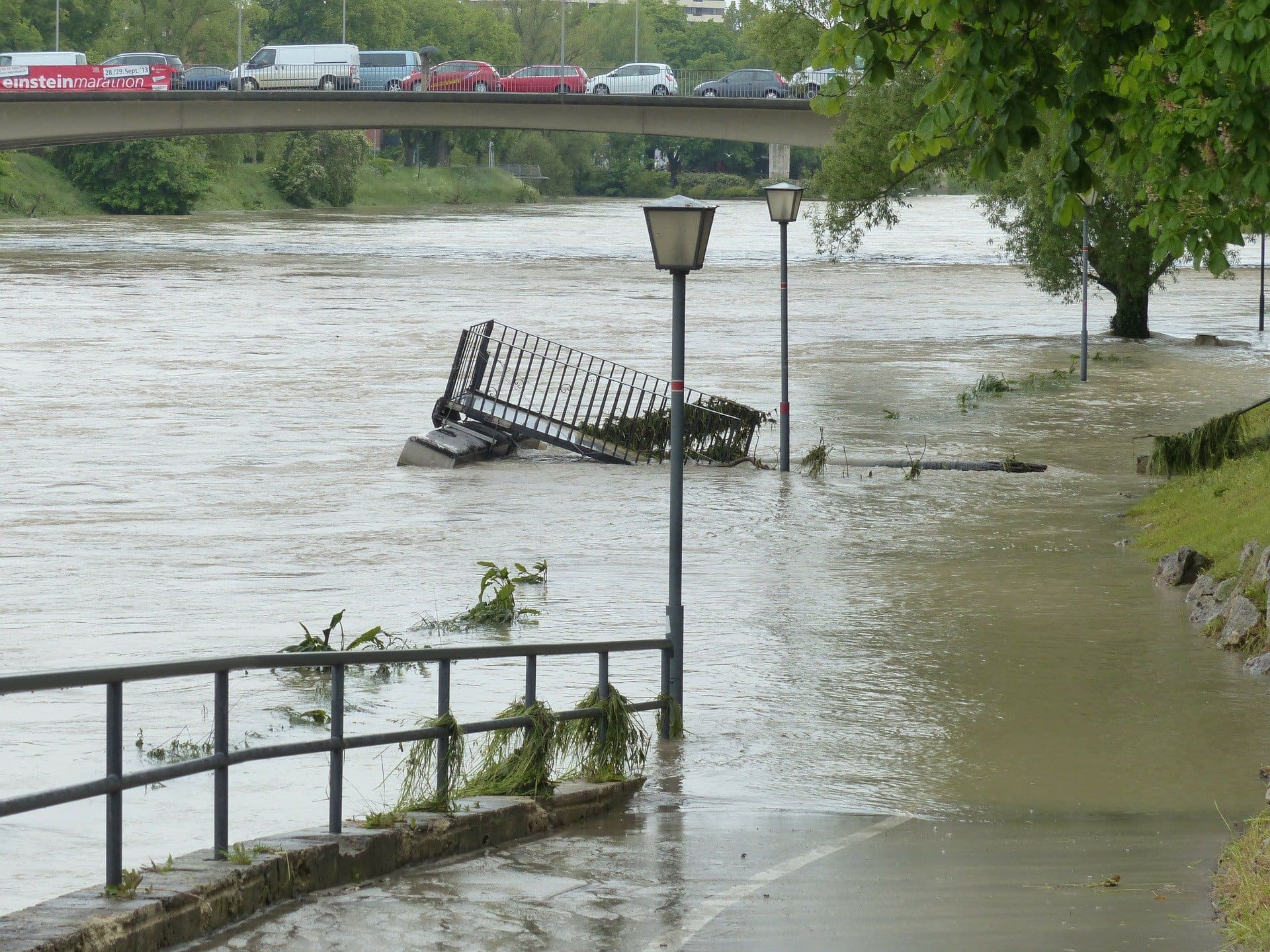
Every year the flood insurance bill arrives, and every year the same question comes with it: is flood insurance worth the cost? It is a fair thing to ask, especially when the premium climbs and water has never reached your door. We raise and protect homes for a living, so we see the full picture, both what a policy does for you and what it cannot do. For most homes near water, flood insurance is worth carrying. The answer that saves people real money has more to do with what you pair it with.
What this article covers in brief:
- Insurance pays you back; it does not keep water out. A policy is financial recovery, not flood prevention.
- Your home policy excludes flood damage. A separate flood policy is the only coverage for water that rises from outside.
- Premiums now price your specific building. The pricing reflects your lowest floor, your foundation, and your home’s history.
- Low risk is not no risk. Roughly a quarter of flood claims come from areas rated low to moderate.
- Raising a home cuts the premium and the risk. Lifting a home one foot above base flood elevation can lower flood premiums by about 30%.
- The smartest choice is rarely one or the other. It is the right mix of a policy and a home that sits above the water.
What does flood insurance actually protect, and what does it leave exposed?
Flood insurance reimburses direct physical loss to your building and the items inside it after a flood. A standard homeowners policy will not pay for any of that, so a separate flood policy is the only thing standing between you and the repair bill when water comes in from outside.
Through the National Flood Insurance Program, a single-family home can carry up to $250,000 in building coverage and $100,000 in contents coverage. On many coastal homes, the cost to rebuild runs higher than that building cap. A homeowner who assumes the policy will rebuild the entire house can be left covering the difference out of pocket at the worst possible time.
A policy is recovery, not prevention. It does not stop the water, shorten the months a family spends living somewhere else, or replace the things that carried meaning.
“A flood check helps you rebuild, but it does not hand back the months a family spends out of the house or the belongings that meant something. We have watched homeowners recover the cost of their drywall and still feel like they lost something a policy could never reach,” the team at DeVooght says.
What an NFIP flood policy does and does not reach:
- Building coverage: the structure, foundation, electrical and plumbing systems, furnace, water heater, and built-in appliances.
- Contents coverage: furniture, clothing, electronics, and personal belongings, purchased separately from building coverage.
- The caps: up to $250,000 for the building and $100,000 for contents on a single-family home.
- Outside the policy: temporary housing, lost time, and the repeat repairs that follow when a home stays in a flood-prone spot.
That gap between what a policy returns and what a flood truly costs is the reason the next question matters: do you need coverage at all if your home sits outside a high-risk zone?
Is the premium worth it if your home is not in a high-risk zone?
Lenders require flood insurance for homes inside a Special Flood Hazard Area with a federally backed mortgage. That rule marks where coverage is mandatory, not where flooding happens. About a quarter of all flood claims come from areas rated low to moderate risk.
Recent storms have made the point hard to miss. When Hurricane Helene pushed into western North Carolina, it flooded counties that FEMA maps rated as low risk, where very few homes carried a policy. Those owners faced the repair bill with no coverage behind them.
For a home outside the high-risk zone, a policy often runs only a few hundred dollars a year, a small figure against a five- or six-figure repair. The decision should rest on what your home and belongings would cost to replace and how much risk you are willing to carry, not on the rating of a square on a map.
Signs flood insurance is worth carrying even outside a high-risk zone:
- Your home sits near any water: a creek, pond, drainage ditch, or low spot counts, not only rivers and coastline.
- The ground around you drains poorly: heavy rain and clogged storm drains flood streets that have stayed dry for years.
- A rebuild would strain your savings: if covering tens of thousands out of pocket would hurt, the premium buys real protection.
- Federal aid would fall short: disaster assistance after a flood often arrives as a loan you repay, not a check you keep.
If a policy makes sense for your home, the next thing to understand is why the bill keeps growing, and what that means for a home that has flooded before.
Why do flood insurance premiums keep climbing, and what does that mean for a home that floods more than once?
Since 2023, the National Flood Insurance Program prices each home on its own risk rather than a broad zone. The factors include how close the home sits to water, the foundation type, the height of the lowest floor compared to base flood elevation, the cost to rebuild, and any past claims.
The bill climbs by design. Federal law caps the yearly increase at 18% for a primary home, and most premiums keep moving toward a full risk-based rate over time. A home that has flooded carries a claims history, and that history pushes the rate higher with each event.
“We meet homeowners all the time who have paid flood premiums for fifteen years and flooded twice in that span. Every claim pushes the bill higher, and the home sits in the same low spot waiting for the next storm. They are paying more and more for a problem that never goes away,” Jason DeVooght says.
For homes that flood again and again, the program offers Increased Cost of Compliance coverage, up to $30,000 to help bring a substantially damaged building up to current elevation requirements. That coverage exists because the program would rather see these homes raised than rebuilt in place to flood a third time.
What now shapes your flood insurance premium:
- Distance to water: the closer your home sits to a flood source, the higher the rate.
- Foundation type and lowest floor: how your home is built and how high its living space sits drive a large share of the cost.
- Replacement cost: rates reflect what it would take to rebuild your specific home.
- Claims history: past flood claims raise the rate, which is why repeat flooding grows more expensive every cycle.
Two of those factors, the foundation and the height of the lowest floor, point to where a homeowner can change the bill instead of absorbing it.
Where does raising your home change the math?
Because the pricing rewards a higher lowest floor and a sound foundation, raising a home is one of the few moves that lowers the premium and the risk at the same time. FEMA estimates that lifting a home one foot above base flood elevation can cut flood premiums by around 30%, and more height can mean more savings.
A premium is a cost you pay again every year for as long as you own the home, and under the current pricing it tends to rise. Raising the home is a one-time investment that lowers that yearly cost and lifts the living space above the water that caused the bill in the first place. We cover how that savings works in our look at how house lifting affects insurance premiums.
“The pricing finally rewards the work we have always done. The height of your lowest floor is now a line on your premium. When we raise a home, the owner gets two things at once: a house that stays above the next flood, and a lower bill every year after,” David DeVooght says.
Most homeowners who call us about raising a home have already paid flood premiums for ten or fifteen years and flooded once or twice in that time. The lift they kept putting off is often the very thing that would have ended the rising bill years earlier. The home’s lowest-floor height shows up on an elevation certificate, the document an insurer uses to confirm where the living space sits.
What raising your home does that a policy alone cannot:
- Lowers the premium directly: a higher lowest floor changes a factor the program now prices.
- Removes the risk, not only the cost: the living space sits above the water instead of in its path.
- Raises resale value: buyers pay more for a home that stands above the flood line.
- Stops the repeat cycle: the home does not flood, take a claim, and climb to a higher rate the next year.
Seeing those two paths side by side, paying every year or investing once, is what turns the original question into a clear decision.
How do you decide between paying premiums and investing in elevation?
Start by adding up the real cost of staying put. The premium is only part of what a flood-prone home costs. Add the deductible you pay on every claim, the belongings a policy never fully covers, and the months a family spends living elsewhere after a serious flood. Set that running total against the one-time cost of raising the home, and the comparison often looks different than the sticker price suggests.
Raising a home is a real investment, but it rarely comes entirely out of pocket. Grants, construction loans, and the Increased Cost of Compliance coverage built into many flood policies can carry part of the cost. We walk through those routes in our guide on how to pay for a home lift.
Raising the home does not end your relationship with flood insurance. A home in a high-risk zone with a federally backed mortgage still needs a policy, but at a lower rate once the living space sits higher. For homeowners who are not ready to raise the whole structure, smaller steps like flood vents and moving utilities up can trim both risk and premium. These options sit alongside the wider range of flood mitigation work that protects a home for the long term.
How to weigh the two paths for your home:
- Tally the yearly cost over time: add up what premiums and deductibles will likely cost across the years you plan to stay.
- Price the one-time fix: get a real figure for raising your home, then subtract the grants and coverage that offset it.
- Factor in what insurance misses: displacement, lost belongings, and repeat repairs never show up on a premium quote.
- Decide on the mix: for many homeowners the answer is a smaller policy on a home that has been raised above the risk.
“The homeowners who do best almost never choose insurance or raising the home as if it were one or the other. They raise the home to take the risk off the table, then carry a smaller policy for everything no one can predict,” the team at DeVooght says.
Protect your home for the long term with DeVooght House Lifters
Flood insurance has its place, and for most homes near water it is worth carrying. The homeowners who come out ahead treat it as one part of a plan rather than the whole plan. We have spent more than 55 years raising and protecting homes on the coast and inland, and that work is what lets a family lower the yearly bill and step out of the water’s path at the same time. If you are weighing flood insurance against raising your home, or you want to understand what lifting would mean for your property and your premium, our team is ready to talk it through. Call us toll-free at 844-203-9912 or reach out through our contact page, and we will help you find the right level of protection for your home.