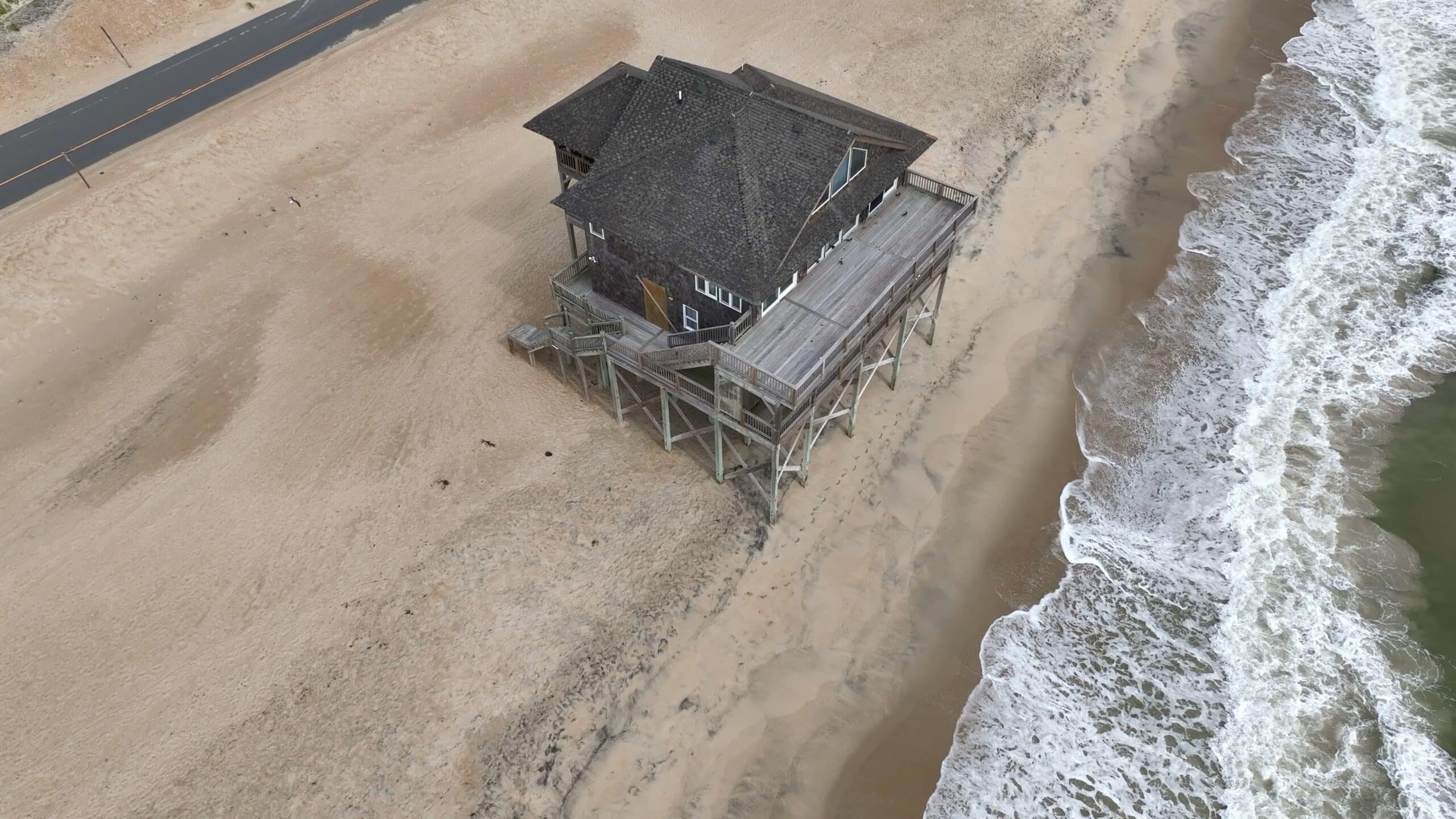
Coastal homeowners across the Outer Banks face a financial crossroads. With flood insurance premiums climbing steadily and sea levels rising an average of 0.15 inches annually in the region, many property owners are rethinking traditional flood protection strategies. House lifting has emerged as a practical alternative that addresses both immediate insurance costs and long-term property protection. This shift reflects a growing awareness among OBX residents that proactive elevation can deliver greater value than accepting annual premium increases.
How Do Rising Flood Insurance Costs Affect Outer Banks Property Owners?
Flood insurance premiums in the Outer Banks vary dramatically based on location and elevation. Properties in X and AE flood zones typically pay between $700 and $1,200 annually, while homes in VE or Cobra zones face substantially higher costs. With FEMA’s Risk Rating 2.0 pricing approach, which launched in April 2021, insurance rates now reflect individualized flood risk based on multiple factors including flood frequency, coastal erosion, storm surge potential, and distance to water sources.
The new pricing system has created unexpected financial pressure for many homeowners. While some properties saw premium reductions, others experienced increases. Pre-firm homes built before municipalities joined the National Flood Insurance Program in the 1970s face particularly sharp rate adjustments, with annual increases of approximately 25% until premiums reach actuarial rates. These ongoing increases can transform an affordable policy into a significant financial burden within just a few years.
“We’re seeing homeowners who built their properties decades ago now facing insurance costs that rival their monthly mortgage payments. The financial strain becomes untenable when you’re looking at premiums that double or triple over a five-year period. That’s when families start exploring structural solutions rather than simply accepting the cost increases.” – The Team at DeVooght
Key factors driving insurance premium increases include:
- Flood zone designation: Properties in Special Flood Hazard Areas face mandatory coverage requirements with higher premiums reflecting increased risk exposure.
- Building elevation: Homes with living areas below Base Flood Elevation experience negative elevation ratings that dramatically increase costs.
- Construction date: Pre-firm structures lack modern flood protection features, resulting in subsidy phase-outs and actuarial rate adjustments.
- Recent claims history: Properties with flood damage records trigger higher risk assessments under Risk Rating 2.0.
- Proximity to water: Distance to coastline, rivers, or other water sources directly impacts calculated flood probability.
Outer Banks Flood Insurance Rate Comparison by Zone
| Flood Zone | Annual Premium Range | Risk Level | Coverage Requirements |
|---|---|---|---|
| X Zone | $300 – $700 | Low to Moderate | Optional (Recommended) |
| AE Zone | $700 – $1,200 | High | Mandatory if Mortgaged |
| VE/Cobra Zone | $1,200 – $3,000+ | Very High (Coastal) | Mandatory if Mortgaged |
| Pre-FIRM Properties | Variable (Increasing 25%/year) | Varies | Mandatory if Mortgaged |
What Financial Benefits Come From Elevating Your Home Above Base Flood Elevation?
Raising a home just one foot above Base Flood Elevation can reduce flood insurance premiums by an average of 30%, according to FEMA data. For Outer Banks homeowners paying $2,000 annually in flood insurance, this translates to $600 in immediate yearly savings. Over a 30-year mortgage period, that single foot of elevation generates $18,000 in premium savings before accounting for inflation or future rate increases.
The savings potential grows exponentially with additional elevation. Homes raised two or three feet above BFE often qualify for preferred risk policies with premiums as low as $400 to $600 annually. These dramatic reductions occur because the elevated structure presents measurably lower risk to insurers. Properties meeting or exceeding local elevation standards benefit from Community Rating System discounts, which in towns like Nags Head can reduce premiums by an additional 20%.
Financial advantages of home elevation include:
- Immediate premium reduction: Qualifying for lower flood insurance rates begins with the next policy renewal after obtaining an updated elevation certificate.
- Increased property value: Elevated homes command higher resale prices as buyers recognize the flood protection and lower insurance costs built into the property.
- Avoided damage costs: Protection from future flood events eliminates expensive repairs, temporary housing expenses, and property value depreciation following storm damage.
- Long-term cost stability: Homes meeting current elevation requirements avoid the annual premium increases that affect non-compliant structures.
- Rental income protection: For vacation rental properties generating substantial revenue, elevation protects against income loss during post-storm recovery periods.
“When we calculate the return on investment for house lifting, the numbers consistently favor elevation over paying escalating insurance premiums. A homeowner spending $3,000 annually on flood insurance will pay $90,000 over 30 years. That same investment directed toward elevation creates permanent value while eliminating the ongoing insurance burden.” – The Team at DeVooght
Cost-Benefit Analysis: House Lifting vs. Ongoing Insurance Premiums
| Scenario | Initial Cost | Annual Insurance (Year 1) | 30-Year Insurance Cost | Net Position |
|---|---|---|---|---|
| No Elevation (Baseline) | $0 | $2,500 | $112,500* | -$112,500 |
| Elevation (1 ft above BFE) | $45,000 | $1,750 | $78,750* | -$78,750 |
| Elevation (2 ft above BFE) | $50,000 | $800 | $36,000* | -$14,000 |
| Elevation (3 ft above BFE) | $55,000 | $500 | $22,500* | +$35,000 |
*Assumes 3% annual premium inflation. Actual savings will vary based on property specifics.
How Does an Elevation Certificate Impact Your Flood Insurance Rates?
An elevation certificate serves as the official documentation that determines your flood insurance premium. Licensed surveyors, professional engineers, or certified architects prepare these certificates by measuring the height of your home’s lowest floor relative to Base Flood Elevation. This seemingly simple document can mean the difference between paying $500 or $3,000 annually for flood insurance.
For properties in high-risk A or V zones, elevation certificates are typically required by lenders and insurers. The certificate documents critical information including building location, lowest floor elevation, flood zone designation, and building characteristics like foundation type and flood vents. Insurance agents use this data to compare your structure’s elevation against the BFE, calculating your specific flood risk and corresponding premium.
Properties elevated above BFE benefit immediately from reduced premiums. The certificate proves your home sits in a safer position relative to expected flood levels, allowing insurers to offer lower rates. Conversely, homes with negative elevation (living space below BFE) face substantial premium increases because they fall within the projected flood path.
Understanding elevation certificate components:
- First floor height measurement: Determines the vertical distance between the lowest floor and ground level, which serves as the primary risk indicator for premium calculations.
- Base flood elevation comparison: Shows how your home’s elevation compares to the predicted flood level, with higher positioning directly translating to lower insurance costs.
- Foundation type documentation: Different foundation systems (slab, crawlspace, pilings) affect flood risk and premium rates differently based on their vulnerability to water damage.
- Flood vent verification: Properly installed flood vents in ground-level enclosures allow water to flow through rather than building pressure against walls, potentially reducing premiums significantly.
- Building diagram: Visual representation helps insurers understand the structure’s relationship to flood risk, including entry points and vulnerable areas.
“The elevation certificate is your most powerful tool for controlling flood insurance costs. We’ve seen cases where obtaining an accurate certificate after house lifting reduced a family’s premium from $4,500 to $900 annually. That’s $3,600 in savings every single year, simply because they could prove their home now sits safely above flood levels.” – The Team at DeVooght
Why Are More Coastal Homeowners Investing in Structural Solutions Rather Than Accepting Higher Premiums?
The decision to invest in structural relocation or elevation represents a fundamental shift in how coastal homeowners approach flood risk. Rather than viewing insurance as an unavoidable expense, property owners increasingly recognize elevation as a one-time investment that provides decades of financial returns and physical protection.
Sea level rise projections amplify this calculation. NOAA estimates indicate sea levels will rise 10 to 12 inches over the next 30 years along the North Carolina coast. For properties already struggling with current flood zones, this additional rise pushes more homes into higher-risk categories with corresponding insurance increases. Elevating now positions properties ahead of these changes rather than perpetually responding to worsening conditions.
The Outer Banks has experienced accelerating erosion rates, with some areas losing 13 to 15 feet of shoreline annually. Since 2020, at least 10 homes have collapsed into the ocean on Hatteras Island alone. These dramatic losses underscore the inadequacy of insurance-only strategies. While insurance covers replacement costs, it cannot restore location, prevent revenue loss for rental properties, or eliminate the emotional trauma of watching a home deteriorate into the ocean.
Factors driving the shift toward structural solutions:
- Predictable costs: House lifting involves a known upfront investment rather than open-ended annual premium increases that compound over time.
- Asset protection: Physical elevation protects the structure itself, preventing damage that insurance can only compensate after the fact.
- Market competitiveness: Elevated homes sell faster and command premium prices in coastal markets where buyers actively seek flood-protected properties.
- Regulatory compliance: Meeting current elevation requirements now avoids future mandatory upgrades triggered by substantial improvement or damage thresholds.
- Climate adaptation: Structural solutions address long-term sea level rise rather than providing temporary financial coverage for recurring flood events.
Outer Banks Sea Level Rise and Erosion Statistics
| Metric | Current Rate | 30-Year Projection | Impact on Homeowners |
|---|---|---|---|
| Annual Sea Level Rise | 0.15 inches/year | 10-12 inches total | Increased flood zone risk |
| Shoreline Erosion | 13-15 feet/year (some areas) | 390-450 feet total | Property loss, damage risk |
| High-Tide Flood Days | 8 events/year | Biweekly by 2100 | Infrastructure damage, access issues |
| Home Collapses (2020-2024) | 10+ structures | Accelerating | Total property loss |
What Makes Helical Pile Foundations Effective for Coastal Home Elevation?
Helical pile foundations have become the preferred method for elevating homes in the Outer Banks due to their superior performance in sandy, shifting soils. These engineered foundation systems consist of steel shafts with helical plates that screw into the ground like giant anchors. The design creates immediate load-bearing capacity without the curing time required for traditional concrete foundations.
In coastal environments, helical piles offer distinct advantages over conventional pilings. The installation process causes minimal ground disturbance, which proves valuable when working in established neighborhoods or sensitive coastal zones. Unlike concrete piers that rely on friction and end-bearing, helical plates engage soil along their entire depth, creating multiple points of resistance against uplift forces from storm surge and wind.
The engineering behind helical piles allows for precise load calculations before installation. Torque measurements during installation verify the pile has reached the required capacity, providing immediate quality assurance. This real-time verification eliminates uncertainty about foundation performance and allows structural engineers to certify the elevated home meets all building codes and safety requirements.
Benefits of helical pile systems for coastal elevation:
- Immediate load capacity: Homes can be lowered onto helical pile foundations immediately after installation, eliminating construction delays associated with concrete curing.
- Minimal site disruption: Installation equipment is compact and maneuverable, allowing work in tight coastal lots without extensive excavation or heavy machinery damage to landscaping.
- Adjustable heights: Helical piles can be extended or adjusted after installation, providing flexibility if future elevation requirements increase due to updated flood maps.
- Storm resistance: The deep anchoring and multi-plate design resist uplift and lateral forces from hurricane winds and storm surge more effectively than surface-bearing foundations.
- Longevity in coastal soils: Properly coated helical piles resist corrosion in saltwater environments, providing decades of reliable performance in harsh coastal conditions.
How Do Homeowners Navigate Permitting and Compliance for House Lifting Projects?
Permitting requirements for house lifting in the Outer Banks reflect the complexity of working in coastal flood zones. Property owners must obtain floodplain development permits from their municipality, which requires demonstrating the elevated structure will meet or exceed Base Flood Elevation plus any local freeboard requirements. In Nags Head, for example, the Local Elevation Standard adds height requirements beyond federal minimums to account for future sea level rise.
Building permits require detailed engineering plans showing foundation design, structural support systems, and connections between the elevated home and its new foundation. Local building officials review these plans to verify compliance with North Carolina building codes and FEMA elevation requirements. The review process typically includes site inspections during foundation installation, the lifting phase, and final placement.
Environmental regulations add another layer of complexity, particularly for properties near dune systems or within the Coastal Area Management Act (CAMA) jurisdiction. Projects may require CAMA permits if they involve major development activities in Areas of Environmental Concern. Working with contractors experienced in coastal permitting streamlines this process and prevents costly delays or compliance issues.
Key permitting and regulatory considerations:
- Floodplain development permits: Required for any substantial improvement to properties in Special Flood Hazard Areas, with specific elevation requirements based on current flood maps and local standards.
- Building permits and inspections: Multiple inspections verify foundation installation, structural connections, and final elevation meet approved engineering plans and building codes.
- CAMA compliance: Coastal properties within Areas of Environmental Concern need state-level permits for major development activities, adding 60 to 90 days to project timelines.
- Utility disconnection and reconnection: Coordination with utility companies for temporary service disconnection during lifting and permanent reconnection at new elevations requires advance scheduling.
- Post-construction elevation certification: Final elevation certificate from a licensed surveyor proves compliance and enables flood insurance rate reductions.
What ROI Can Homeowners Expect From House Lifting Versus Continued Insurance Payments?
Return on investment for house lifting varies based on current insurance costs, elevation achieved, and property value. For a typical scenario where a homeowner pays $2,500 annually in flood insurance and elevates their home two feet above BFE at a cost of $50,000, premium reductions to approximately $800 annually create $1,700 in yearly savings. At this rate, the elevation investment reaches break-even in roughly 29 years.
This calculation improves dramatically when factoring in avoided premium increases. If flood insurance costs continue rising at 3% annually, the non-elevated home’s premiums reach $3,700 in year 15 and $5,000 by year 25. Meanwhile, the elevated home maintains stable premiums around $900 to $1,000 annually. Accounting for these diverging cost trajectories, the actual break-even point occurs around year 15 to 18, with substantial net savings accumulating thereafter.
Beyond direct insurance savings, house lifting creates additional financial value through increased property marketability, avoided flood damage costs, and protection of rental income streams. Properties positioned above current and projected flood levels command premium prices from buyers who recognize the long-term value of flood-resistant construction. For vacation rental properties, avoiding even one season of storm damage and repairs can preserve $30,000 to $50,000 in lost rental income.
Comprehensive ROI factors for house lifting:
- Direct insurance savings: Immediate premium reductions begin with the first policy renewal following elevation, creating predictable annual savings that compound over the life of ownership.
- Avoided premium inflation: Locking in preferred risk rates protects against the 3% to 5% annual increases that affect non-elevated properties in flood zones.
- Property value appreciation: Real estate data shows elevated coastal homes sell for 10% to 20% more than comparable properties at grade, particularly in high-risk flood zones.
- Damage prevention savings: Each avoided flood event eliminates $20,000 to $100,000 in repair costs, temporary housing expenses, and content replacement.
- Rental income protection: For vacation rentals, maintaining booking availability during post-storm periods preserves annual income that often exceeds the cost of elevation within five to seven years.
“We encourage homeowners to view house lifting through a total cost of ownership lens rather than just comparing upfront costs. When you factor in rising insurance premiums, avoided flood damage, increased property value, and rental income protection, most properties achieve positive ROI within 12 to 15 years. Beyond that point, you’re essentially getting free flood protection while your neighbors continue paying escalating premiums.” – The Team at DeVooght
How Does Coastal Erosion Affect the Decision to Invest in House Lifting?
Accelerating erosion rates along the Outer Banks create urgency around elevation decisions. Properties losing 10 to 15 feet of shoreline annually face the possibility that house lifting may no longer be viable within a few years if erosion continues unchecked. Areas of Hatteras Island have already reached critical thresholds where homes sit dangerously close to the active beach, making elevation impractical without concurrent shoreline erosion mitigation or property relocation.
The economics of house lifting change substantially when erosion threatens property viability. Investing $50,000 to $75,000 in elevation makes financial sense for properties with decades of remaining useful life in their current location. Properties where erosion may necessitate relocation or demolition within 10 years require different strategies, potentially including coastal home relocation to safer parcels or strategic decisions about property disposition.
Erosion patterns also affect insurance availability and cost. Properties identified as having high erosion risk face difficulty obtaining traditional homeowners coverage, with some insurers withdrawing from coastal markets entirely. This insurance market constriction makes the flood insurance savings from elevation even more valuable, as it may represent one of the few remaining affordable coverage options for at-risk properties.
Erosion considerations in elevation planning:
- Shoreline retreat monitoring: Annual erosion measurements help predict when properties may reach critical setback thresholds that make continued occupation untenable regardless of elevation.
- Property lifespan calculations: Financial analysis should account for realistic property longevity based on current erosion rates and available shoreline protection options.
- Combined mitigation strategies: Properties facing moderate erosion may benefit from pairing house lifting with dune restoration or living shoreline projects that address both flood and erosion risks.
- Timing optimization: Elevating early in a property’s at-risk period maximizes the useful life during which owners can benefit from reduced insurance costs and flood protection.
- Exit strategy planning: Understanding erosion trajectories helps homeowners decide whether elevation, relocation, or strategic sale represents the best financial path forward.
What Role Does Historic Preservation Play in Outer Banks House Lifting Projects?
Many Outer Banks properties carry historical significance that requires special consideration during elevation projects. Historic preservation standards emphasize maintaining architectural integrity while adapting structures to meet modern flood protection requirements. This balance requires careful planning and specialized techniques that preserve character-defining features throughout the lifting process.
Older coastal homes often feature architectural elements like original wood siding, historic windows, decorative trim, and unique foundation systems that demand expert handling during elevation. Lifting these structures without causing damage to irreplaceable materials requires experienced contractors who understand both structural engineering and preservation principles. Projects involving properties listed on the National Register or located in historic districts may require additional review by preservation officials.
The intersection of historic preservation and flood mitigation has driven development of innovative techniques that protect both heritage and safety. Methods like incremental lifting, temporary bracing systems, and careful documentation allow historic homes to achieve required elevations while maintaining their architectural character. These approaches often cost more than standard elevation projects but preserve property values tied to historical significance.
Historic preservation considerations for house lifting:
- Architectural survey and documentation: Detailed photographic and measured drawings record existing conditions before work begins, providing reference for restoration of any disturbed elements.
- Material protection protocols: Special handling procedures prevent damage to historic wood, masonry, or architectural details during the lifting process.
- Foundation compatibility: New foundation systems must support historic loads while respecting the building’s age and construction methods, often requiring custom engineering solutions.
- Regulatory compliance: Projects affecting historic properties may require State Historic Preservation Office review, particularly when federal funding or permits are involved.
- Reversibility principles: Preservation standards favor elevation methods that could theoretically be reversed, protecting future options for the historic structure.
How Do Financing Options Make House Lifting More Accessible to Outer Banks Homeowners?
The upfront cost of house lifting creates a barrier for many homeowners, even when long-term savings clearly justify the investment. Financing programs have emerged to bridge this gap, making elevation projects accessible to families who recognize the value but lack immediate capital. FEMA’s Flood Mitigation Assistance program provides grants to property owners in communities participating in the National Flood Insurance Program, potentially covering substantial portions of elevation costs.
State and local mitigation programs offer additional funding sources. North Carolina’s Resilient Communities Program works with coastal municipalities to identify and prioritize flood mitigation projects, including house elevation. While grant competition remains intense and funding limited, successful applicants can receive assistance covering 75% or more of project costs, dramatically improving the financial equation for house lifting.
For homeowners who do not qualify for grant funding, home equity loans or refinancing options provide alternative paths to elevation financing. The insurance premium savings and increased property value resulting from elevation help support loan payments, particularly when structured to ensure monthly savings exceed additional loan costs. Some lenders have begun offering specialized elevation loans that recognize the risk reduction benefits of lifting homes above flood levels.
Financing pathways for house lifting projects:
- FEMA Flood Mitigation Assistance: Competitive grants available to NFIP-participating communities, covering up to 75% of elevation costs for qualified properties with repetitive flood losses.
- Hazard Mitigation Grant Program: Post-disaster funding becomes available after federal disaster declarations, providing elevation assistance to properties in affected areas.
- State resilience programs: North Carolina’s coastal resilience initiatives offer planning assistance and potential funding for flood mitigation projects in priority areas.
- Home equity financing: Leveraging existing home equity allows homeowners to spread elevation costs over time while benefiting from immediate insurance savings.
- Cash-out refinancing: Refinancing mortgages at favorable rates while extracting equity for elevation projects can result in similar or lower monthly payments despite increased loan amounts.
What Construction Timeline Should Homeowners Expect for House Lifting Projects?
House lifting projects in the Outer Banks typically require 8 to 16 weeks from permitting through completion, though timelines vary based on property complexity, foundation type, and weather conditions. The permitting phase alone can consume 4 to 8 weeks as building officials review engineering plans and coordinate with state agencies on environmental approvals. Homeowners benefit from starting this process during winter months when construction season demand remains lower and permit reviewers have greater capacity.
Active construction phases include site preparation, foundation installation, house lifting, and final placement. Foundation work using helical piles can often be completed in 1 to 2 weeks, providing immediate load-bearing capacity. The actual lifting process typically requires 3 to 5 days, during which the home is carefully raised to its target elevation using hydraulic jacks. Final placement, utility reconnection, and site restoration add another 2 to 4 weeks, depending on the complexity of electrical, plumbing, and HVAC modifications required.
Weather interruptions represent the most significant variable in coastal construction timelines. Hurricane season, which runs from June through November, can delay projects or prevent scheduling altogether. Smart planning places the most weather-dependent work phases outside peak storm season, reducing the likelihood of costly delays. Winter and early spring generally offer the most predictable construction windows, though cold temperatures can affect concrete work if traditional foundation methods are used.
Typical house lifting project phases and durations:
- Permitting and approvals (4-8 weeks): Engineering design, permit applications, building department review, and CAMA permits if required create the project foundation.
- Site preparation (1 week): Utility disconnection, temporary support systems, and equipment mobilization prepare the property for foundation and lifting work.
- Foundation installation (1-2 weeks): Helical pile installation, load testing, and final adjustment position the new foundation system at required elevations.
- House lifting (3-5 days): Hydraulic jacking systems carefully raise the structure to target height, with continuous monitoring to prevent structural stress or damage.
- Final placement and connections (2-4 weeks): Setting the home on new foundation, reconnecting utilities, adjusting stairs and access, and completing site restoration.
- Inspection and certification (1-2 weeks): Building inspections verify code compliance, final elevation certificate documents achieved height for insurance purposes.
Why Do Some Properties Require Relocation Rather Than In-Place Elevation?
Extreme erosion conditions or site constraints occasionally make in-place elevation impractical or impossible. Properties located within 20 feet of actively eroding shorelines face the reality that elevation provides flood protection but offers no solution to shoreline retreat. In these cases, structural relocation to safer locations on the same parcel or to entirely new properties represents the only viable long-term strategy.
Site limitations can also necessitate relocation over elevation. Properties with insufficient setbacks from property lines, overhead utilities, or protected dune systems may lack the vertical clearance needed for elevation while maintaining required setbacks. Moving the structure to a different location solves these spatial conflicts while achieving flood protection and erosion safety simultaneously.
The decision between elevation and relocation involves complex calculations about property value, remaining site lifespan, and future flood risk. Relocation costs typically exceed in-place elevation by 50% to 100% due to the need for foundation work at both the original site and new location, plus transportation logistics. These higher costs make sense only when the existing location faces imminent threats that elevation alone cannot address.
Factors indicating relocation over elevation:
- Critical erosion proximity: Properties within one to two years of erosion-driven uninhabitability require relocation rather than investment in elevation at a doomed location.
- Inadequate setbacks: Local zoning requirements may prevent elevated structures from meeting setback requirements at their current location, forcing relocation to compliant areas.
- Access limitations: Properties where elevation would create access problems due to steep grades or ADA requirements may need relocation to maintain usability.
- Foundation incompatibility: Existing foundations so compromised that elevation is impossible without complete structural reconstruction favor relocation to new foundations.
- Future development plans: Property owners considering lot subdivision or development may relocate existing homes to optimize land use while achieving flood protection.
FAQs About Outer Banks House Lifting and Flood Insurance
Can I reduce my flood insurance immediately after house lifting?
Yes, insurance premium reductions take effect at your next policy renewal after you provide an updated elevation certificate showing your home meets or exceeds Base Flood Elevation. Most homeowners see savings within 30 to 60 days of project completion.
What happens to my flood insurance if I don’t elevate but my area is remapped into a higher flood zone?
Flood map updates that increase your flood zone designation trigger immediate premium increases, sometimes doubling or tripling costs overnight. Properties with mortgages must maintain flood insurance at rates reflecting the new risk assessment, creating ongoing financial pressure.
How much does house lifting typically cost in the Outer Banks?
House lifting costs range from $40,000 to $100,000 depending on home size, foundation type, elevation height, and site accessibility. Single-story homes on simple foundations cost less than multi-story structures requiring complex engineering and support systems.
Will house lifting affect my property taxes?
House lifting generally does not increase property tax assessments since you’re modifying the existing structure rather than adding square footage. Some jurisdictions may reassess based on increased property value, though the impact remains modest compared to new construction.
Can I live in my home during the lifting process?
No, homes must be vacant during active lifting operations for safety reasons. Utility disconnection and structural movement make occupancy impossible. Most projects require 1 to 2 weeks of vacancy, though some homeowners choose to stay elsewhere for the entire construction period.
Does house lifting qualify for any tax benefits or incentives?
Federal tax benefits for flood mitigation are limited, though some grant programs exist. The primary financial benefit comes through insurance premium reductions and increased property value rather than direct tax incentives. State and local programs occasionally offer property tax abatements for mitigation improvements.
What maintenance does an elevated home require?
Elevated homes need regular foundation inspections to verify pile integrity and connection points. Annual checks of flood vents, below-structure drainage, and stairs or access systems help maintain flood protection and safety. Overall maintenance requirements remain similar to pre-elevation conditions.
How does house lifting affect my home’s resale value?
Elevated homes command premium prices in coastal markets, typically selling 10% to 20% higher than comparable properties at grade. Lower flood insurance costs and reduced flood risk make elevated properties attractive to buyers, often resulting in faster sales.
Conclusion
Rising flood insurance premiums and accelerating coastal changes have prompted Outer Banks homeowners to seek permanent solutions rather than accepting escalating costs. House lifting addresses both immediate insurance expenses and long-term flood protection, creating value that compounds over decades of ownership. The combination of premium savings, damage prevention, and property value enhancement positions elevation as a strategic investment rather than simply a construction project.
The Team at DeVooght brings specialized expertise in coastal house lifting, foundation systems, and flood mitigation to every project. Our understanding of Outer Banks conditions, permitting requirements, and engineering challenges helps homeowners navigate complex decisions about elevation timing, methods, and financing. Whether you’re facing your first insurance renewal shock or planning ahead for future flood map changes, we provide the technical knowledge and hands-on experience needed to protect your coastal investment.
Contact us today to discuss your house lifting needs and explore how elevation can reduce your flood insurance costs while safeguarding your Outer Banks property for generations to come.