
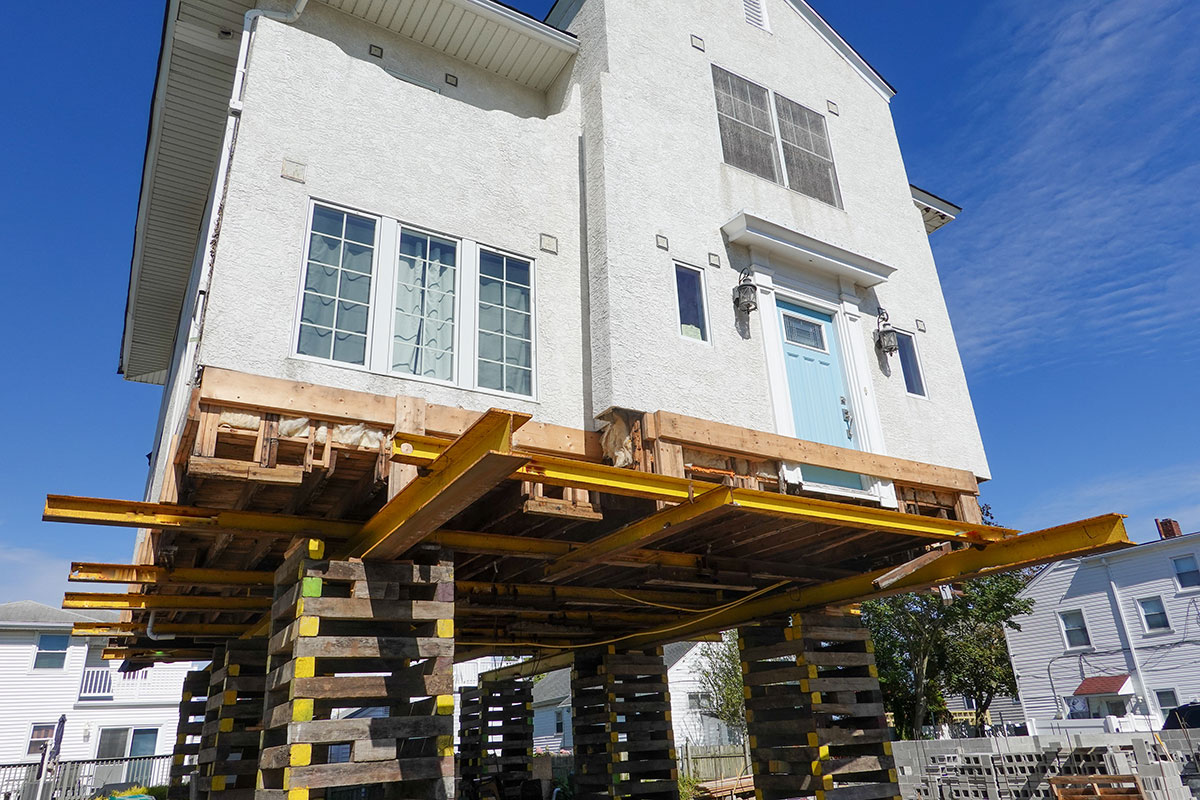
Buying a house to move to your land can put a well-built home on your property for far less than the price of new construction. Every year, solid houses sell for a fraction of their value because they stand in the path of a road project, a new development, or an institutional expansion. The buyer who knows how to evaluate the structure and the route between it and their lot gets the deal. The buyer who skips that step often inherits a project the math can’t save. We have moved structures of every size for more than 55 years, and this guide walks through how the process works, what it costs from purchase to move-in, and where these houses are actually listed.
Key takeaways from this article:
- Order of operations decides the outcome. Have a structural mover review the house and the route before you sign anything, not after.
- The route matters more than the distance. Power lines, bridges, and road widths cap what you can buy, no matter how good the price is.
- Construction type drives cost. A rectangular wood-frame ranch moves for far less than a sprawling masonry home of the same square footage.
- Budget the full stack. Purchase price, the move, the new foundation, site work, utilities, and a contingency all belong in one number.
- These houses rarely appear on Zillow. Mover networks, demolition sales, and preservation groups are where the inventory lives.
- Financing is workable but sequenced. Lenders want zoning clearance and a plan before they lend against a house that isn’t on your land yet.
How Does Buying a House to Move to Your Land Actually Work?
The process has four stages: confirm your land is ready to receive a house, find a candidate structure, have a mover verify the route and the structure are feasible, and then purchase. Most people run those stages in the wrong order. They find a house they love, buy it, and then call a structural relocation company to figure out the rest. That sequence works only by luck.
Land readiness comes first because it defines everything downstream. Your lot needs legal access wide enough for an oversize load, soil that can carry a foundation, and zoning that permits the structure you plan to place there. Setback rules, minimum square footage requirements, and design standards vary by county, and we cover how those rules apply to moves in our guide to zoning laws for structural moves in North Carolina. If your lot fails any of these tests, no house is worth buying yet.
Once you find a candidate, the mover’s feasibility review becomes the deciding vote. We survey the route for overhead lines, bridge weight limits, turns, and grade changes, and we inspect the structure’s framing and foundation connections. That review tells you whether the purchase price is a bargain or a trap.
“Almost every troubled project we get called into started the same way: the buyer closed on the house first and called a mover second. Reverse those two steps and most of the risk disappears before you spend a dollar.” – Jason DeVooght
With feasibility confirmed, the purchase itself is usually simple. You are buying the structure only, not the ground under it, so the contract typically includes a deadline to remove the house from the seller’s property. Knowing where to find these sellers is the part most buyers struggle with.
Where Can You Find Houses for Sale to Be Moved?
Relocation candidates rarely show up in a standard real estate search because the land is not part of the sale. The inventory moves through channels most buyers never check.
The most productive places to find houses for sale to be moved:
- Structural moving companies. Movers hear about available houses before anyone else because sellers call us to price the removal. Some movers keep inventory pages of homes sold on a delivered basis.
- Development and road project buyouts. When a developer or a department of transportation acquires land, the buildings on it often sell for a token price because demolition costs the owner money. Watch public notices and planning board agendas in your county.
- Historic preservation organizations. Local and state preservation groups maintain lists of endangered structures and actively recruit buyers willing to relocate them rather than let them fall to demolition.
- Listings flagged “to be moved.” Some MLS listings and classified sites carry this label. The pool is small but the pricing reflects the seller’s urgency.
- Institutional expansions. Universities, hospitals, and churches expanding their campuses regularly sell surrounding houses for removal, and they often prefer relocation over demolition for community relations reasons.
Price signals in this market read differently than in normal real estate. A house listed for a few thousand dollars, or offered free, is priced that way because the seller’s alternative is paying to tear it down. The low price is not a red flag by itself. What separates a genuine bargain from an expensive mistake is whether the structure and the route can handle the move.
What Makes a House a Good Candidate to Move?
We evaluate candidates on three factors: construction type, shape, and route. Distance matters less than most buyers expect. A compact house moving thirty miles down open roads can cost less than a complicated one moving half a mile under low utility lines.
What we look at when judging a relocation candidate:
- Construction type. Wood-frame homes on crawl spaces or basements are the strongest candidates because lifting steel slides beneath the floor system cleanly. Masonry and slab-on-grade homes can be moved, but they add engineering, weight, and cost.
- Shape and footprint. A rectangular two-story concentrates weight over a smaller footprint and rides well on dollies. Long single-story homes with wings at odd angles need more steel and more time.
- Structural condition. Sagging framing can be shored and moved, but active rot or a failing sill plate changes the budget. We inspect before we quote.
- The route. Power line heights, bridge ratings, tree canopies, and turn radii determine whether the house travels intact, travels with the roof lowered, or doesn’t travel at all.
- Clearance at both ends. The crew needs working room to set steel at the origin site and to stage the house over the new foundation at yours.
This is why a free house is sometimes the most expensive option on your list. If the route requires utility companies to lift lines at dozens of crossings, those fees can exceed the value of the structure. Buyers who understand this walk away from bad candidates early and reserve their budget for a house that pencils out. Buyers worried that any move damages a house can review our article on whether moving a building or house reduces its integrity; with unified hydraulic lifting, the structure stays in plane through the entire lift and ride.
“People assume distance is the cost driver. It isn’t. We have moved a house across a county for less than it cost to move a masonry home three blocks. The structure and the route write the invoice.” – the team at DeVooght
Once a candidate passes these tests, the question becomes what the whole project costs, not just the move.
What Does the Total Project Cost From Purchase to Move-In?
Most published figures cover only the transport, which is why so many buyers get surprised. The purchase price and the moving fee are two lines in a longer budget. We break down the moving-fee variables in detail in our guide to the cost to move or relocate a building, so here we focus on the full stack.
The complete budget for buying and moving a house to your land:
- Purchase price of the structure. Often the smallest line item, ranging from free to a modest five figures for houses sold for removal.
- The structural move. Lifting, transport, and setting, priced by size, construction type, and route complexity.
- New foundation. Footings or a full foundation at your lot, built to receive the house. Foundation type and site grading drive this number.
- Site work and access. Clearing, driveway or temporary access construction, and tree trimming along the final approach.
- Utilities. Well or water tap, septic or sewer connection, and electrical service, plus reconnection inside the house.
- Permits and escorts. Transport permits, police escorts where required, and utility company fees for lifting lines along the route.
- Contingency. Hold ten to twenty percent for the conditions no one can see until steel is under the house.
Run this stack against local construction pricing and the case for relocation is usually strong. When we compared relocation to building new for coastal Outer Banks projects, the moved house came out well ahead, and the reasons carry over to inland projects. The broader benefits of taking this path, from embodied quality to timeline, are laid out in our article on the advantages of moving a house.
“A written proposal should let you add every line item on one page and get a number you can take to your bank. If a mover’s quote leaves the foundation, escorts, or utility fees as somebody else’s problem, you don’t have a budget yet.” – David DeVooght
A complete budget also happens to be the document your lender will ask for first.
How Do Financing and Insurance Work for a House You Plan to Move?
Lenders can finance these projects, but they finance the finished result, not the house sitting on someone else’s land. The appraisal that matters is the completed home on your lot, so the bank wants the whole plan documented before closing. Buyers who bring a zoning clearance letter from the county, a written moving proposal, and foundation and utility bids get approvals. Buyers who bring only a purchase contract get declined.
Equity in your land is your strongest asset here. Many buyers borrow against the paid-off lot to fund the purchase and move, then convert to a conventional mortgage once the house is set and appraised. Community banks familiar with construction lending handle these projects far better than large national lenders. If a mortgage already exists on either property, the lender must be informed before the structure moves; our article on how to notify your mortgage company before moving a house covers what they require.
Insurance follows a similar split. Your homeowner’s policy takes effect once the house is set on its foundation, while the move itself is covered under the mover’s rigging and cargo coverage. Ask any mover you interview for proof of both before you compare quotes. We carry that coverage on every project, from small cottages to the historic 1713 home we relocated in Cranbury, New Jersey, and you can see the range of completed work in our project gallery.
Put a Proven House on Your Land With DeVooght
Our team has spent more than five decades lifting and relocating structures, backed by 11 Unified Hydraulic Lifting Machines, 2.5 million pounds of steel beams, and 60,000 cribbing blocks. We can review a candidate house and your route before you commit a dollar, then handle the lift, transport, and set from start to finish. If you are thinking about buying a house and moving it to your land, contact the DeVooght team for a structural relocation consultation at 844-203-9912 or through our contact page.