
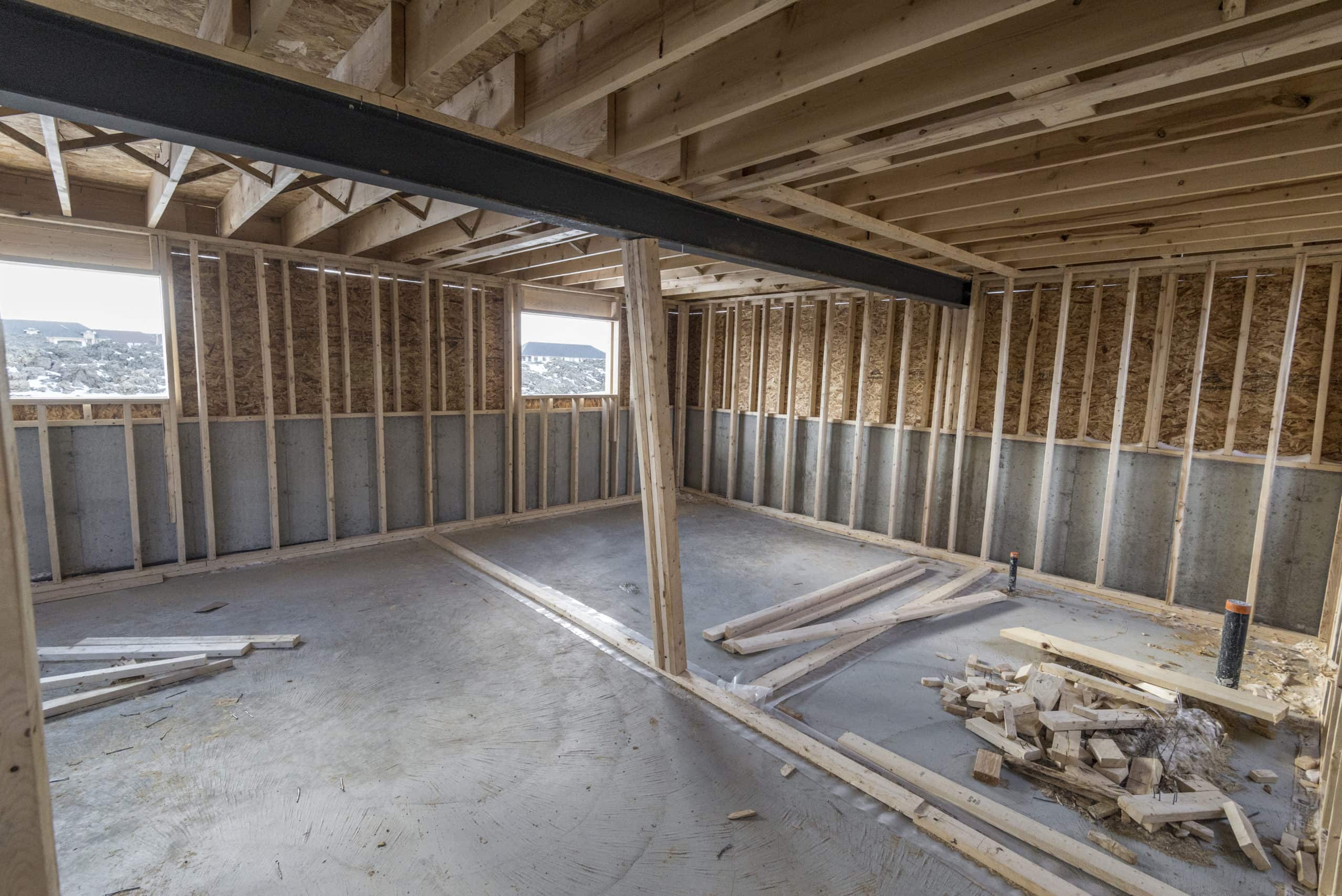
The cost to move a shed can run anywhere from a few hundred dollars to several thousand, and the cost to move a garage can climb well past that. The wide range confuses a lot of property owners, but it comes down to one question most pricing guides never ask: was your structure built to move, or was it built to stay put? After 55 years of lifting and relocating structures of every size, we can tell you that the answer to that question matters more than square footage, and it shapes every dollar of your quote.
Key takeaways from this article:
- Portable sheds are the least expensive to move. A skid-built shed relocated within the same property usually costs a few hundred dollars, while a local road move runs several hundred to around fifteen hundred.
- Permanent structures are a different job entirely. A garage or workshop anchored to a slab or block foundation requires structural lifting equipment, and costs often land in the several-thousand-dollar range or higher.
- Construction type drives cost more than size. A small garage on a foundation can cost far more to move than a large shed on skids.
- Distance changes the equation. On-property moves avoid road permits entirely, while over-the-road moves add oversize load permits, escorts, and route planning.
- Moving often beats replacing. Once you add demolition, disposal, and new construction, relocating a solid structure frequently costs less than building new.
- Condition matters. An older or poorly built structure may need bracing before it can travel safely, which adds cost but prevents a collapse.
What Actually Determines the Cost to Move a Shed or Garage?
Most pricing articles list size, distance, and access as the main cost factors. Those matter, but they sit downstream of a more basic dividing line: portable versus permanent construction. A portable shed sits on skids or blocks and was designed from the start to be picked up and carried. A permanent outbuilding, like a stick-built garage bolted to a concrete slab, was never meant to leave its spot. Moving the first is a hauling job. Moving the second is a structural relocation project involving hydraulic lifting, steel beams, and cribbing.
This is why two structures with nearly identical footprints can produce quotes that differ by a factor of ten. A 12×20 portable shed and a 12×20 slab-built garage look similar from the street, but the shed can be loaded onto a trailer in an afternoon while the garage has to be separated from its foundation, lifted, and carried on dollies. When you understand which side of that line your structure sits on, the price ranges below start making sense.
How Much Does It Cost to Move a Portable Shed?
Portable sheds are the most affordable structures to relocate because the equipment involved is relatively light. Shed movers use a shed mule, rollers, or a small trailer, and a straightforward job wraps up in a few hours. Moving a shed to a new spot on the same property generally runs a few hundred dollars, often in the range of two hundred fifty to seven hundred depending on shed width and site conditions. Local road moves land between roughly three hundred and fifteen hundred dollars, and long-distance transport climbs from there as mileage, fuel, and permits stack up.
The factors that push a portable shed move toward the high end of the range:
- Width over roughly eight feet: Wider sheds require an oversize load permit for road travel, and sheds beyond about twelve feet wide often require an escort vehicle.
- Difficult site access: Tight gates, soft ground, slopes, fences, and mature trees add labor hours and sometimes require different equipment.
- Foundation work at the new site: The shed needs a level, prepared base waiting for it. Gravel pads and blocking add a few hundred dollars if they are not already in place.
- Anchoring and utility checks: Anchored sheds must be detached first, and any new anchoring location should have underground utilities marked before work begins.
“The quote for a portable shed is mostly a labor and access calculation. The quote for a permanent structure is an engineering calculation. Homeowners who call us with a garage on a slab are often surprised to learn they need a structural mover, not a shed hauler, and that distinction is the single biggest factor in what they will pay.”
— Jason DeVooght
If your structure fits the portable description, a regional shed mover can usually handle it. If it does not, the job changes character completely, and that change is what the next section explains.
Why Does Moving a Garage or Permanent Outbuilding Cost So Much More?
A garage, workshop, or other permanent outbuilding is attached to the ground, and detaching it safely is where most of the cost lives. The structure must first be separated from its foundation, which means cutting anchor bolts and, in some cases, performing a slab separation so the building can travel without its concrete floor. Steel beams then slide beneath the framing, hydraulic jacks raise the building in unison so it stays level, and cribbing supports it while dollies or a transport trailer move into position. This is the same process we use to move houses, scaled to the outbuilding.
Because of that equipment and labor, permanent outbuilding moves generally start in the low thousands for a short on-property relocation and climb toward five figures for larger structures or road moves. Wired or plumbed buildings add utility disconnection and reconnection costs that almost no pricing guide mentions. We completed a new-construction garage relocation in Brillion, Wisconsin using exactly this unified lifting approach, and the garage arrived at its new location without a single crack in the framing or finishes.
That intact arrival is the point of paying for proper equipment. A garage lifted unevenly racks at the corners, cracks its sheathing, and pulls door openings out of square. Unified hydraulic lifting keeps every jack rising at the same rate, so the building experiences no more stress in transit than it does sitting still. Knowing what the higher price buys makes the next question easier to answer: is the move worth it compared to starting over?
Should You Move Your Shed or Garage, or Replace It?
Replacement looks simple until you price the whole sequence. Getting rid of the old structure means paying for demolition and debris disposal, which alone can run from several hundred dollars for a shed to a few thousand for a garage. Then comes the new build: a quality shed costs several thousand dollars, and a new garage routinely costs twenty to fifty thousand or more once you include the slab, framing, roofing, and electrical. Against those numbers, a move that costs a fraction of new construction preserves a structure you already own outright. We walk through the same math for whole houses and commercial structures in our guide to the cost to move or relocate a building, and the logic holds at every scale.
When moving usually wins the comparison:
- The structure is sound: Solid framing, a straight roofline, and dry sills mean the building will handle a lift without special reinforcement.
- Replacement quality would cost more: Older garages and Amish-built sheds often have better materials than budget replacements available today.
- Site changes forced the move: An addition, a new driveway, or a setback violation is a location problem, not a building problem, so relocating solves it fully.
When replacement makes more sense:
- Rot or structural failure is widespread: A building that cannot support its own weight during a lift costs more to brace than it is worth.
- The structure no longer fits your needs: Paying to move an undersized or failing building just relocates the problem.
Condition sits at the center of this decision, and it is also the factor that makes do-it-yourself moves risky in ways owners rarely anticipate.
What Can Go Wrong With a DIY Shed or Garage Move?
Plenty of small sheds have been moved with pipe rollers and patience, and for a light, well-built structure on flat ground, that can work. The failures we get called about follow a pattern, though. An owner lifts one corner at a time with a jack, the frame racks, and the fasteners holding decades-old lumber together let go. Wood-frame buildings depend on their sheathing and joints staying square, and wooden structure relocation done professionally starts by bracing the frame diagonally so it moves as one rigid unit instead of a collection of loose panels.
“Almost every damaged shed we are asked to rescue was lifted from a single point. The building did not fail because it was weak. It failed because the lift put stress in a direction the framing was never designed to carry.”
— the team at DeVooght
The risks compound with equipment. Rented forklifts and tractor buckets concentrate the entire load on two narrow forks or a strap, and a shifting shed can come off a machine fast. We cover the same failure modes at house scale in our article on DIY house lifting and jacking dangers, and the physics do not change for a smaller building. If the structure matters to you, the cost of a professional move is cheap insurance against replacing it entirely. Here is what that professional process looks like from your side.
What Happens When You Hire a Structural Mover for an Outbuilding?
The job starts with an assessment, not a price sheet. We look at the construction type, the foundation attachment, the condition of the framing, and the access at both the current and future sites. That inspection is what turns a vague price range into a firm quote, because it answers the questions that actually drive cost. From there, the process runs through a predictable sequence: permits get pulled for any road travel, utilities get disconnected, the structure gets braced and separated from its foundation, and the lift and move happen on a scheduled day, often in a single day for an outbuilding. Larger post-frame structures follow the same logic, which we cover in our tips for pole building relocation.
“A homeowner’s job in this process is site readiness. Have the building empty, the path clear, and the new foundation prepared. Nearly every avoidable charge we see on outbuilding moves traces back to a site that was not ready on moving day.”
— David DeVooght
Route planning matters more than most owners expect for road moves. Height determines whether power lines need to be lifted along the route, and width determines permits and escorts. A mover who handles this work regularly builds those costs into the quote up front, so the number you approve is the number you pay.
Get Help Moving Your Shed, Garage, or Outbuilding
Our team at DeVooght House Lifters has spent more than five decades relocating structures of every kind, from backyard sheds and garages to entire homes and commercial buildings, backed by a fleet of eleven unified hydraulic lifting machines and millions of pounds of steel beams and cribbing. We can assess your structure, explain exactly what your move involves, and give you a firm number to weigh against replacement. If you need help with structural relocation or moving a garage, shed, or other outbuilding, call us toll-free at 844-203-9912 or contact the DeVooght team today.